The history of cryptocurrency is a fascinating journey from obscure cryptographic experiments to a multi-trillion-dollar asset class that has captured the attention of the world. It’s a story of idealists, innovators, speculators, and scammers—all playing a role in shaping a new financial paradigm.
This timeline traces the key moments in cryptocurrency history, from the cypherpunk movement of the 1980s to the institutional adoption of today.
The Pre-History: Cypherpunks and Early Attempts (1980s-2008)
Long before Bitcoin, a group of mathematicians, cryptographers, and computer scientists known as the cypherpunks dreamed of using cryptography to create private, decentralized digital cash.
1983: David Chaum and e-Cash
American cryptographer David Chaum invented “e-Cash,” an early form of digital money that used cryptographic protocols to preserve user privacy. In 1990, he founded DigiCash, which allowed for anonymous electronic transactions. However, DigiCash was centralized and ultimately failed, filing for bankruptcy in 1998. But Chaum’s work laid the foundation for all future digital currencies.
1998: Nick Szabo and Bit Gold
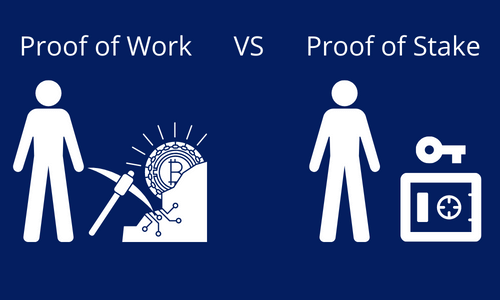
Computer scientist Nick Szabo proposed “Bit Gold,” a decentralized digital currency that required participants to solve cryptographic puzzles (a precursor to Bitcoin’s Proof-of-Work). Bit Gold was never implemented, but Szabo’s ideas closely resemble what Bitcoin would later become—so much so that some have speculated (without proof) that Szabo might be Satoshi Nakamoto.
1998: Wei Dai and b-money
Wei Dai proposed “b-money,” another early concept for an anonymous, distributed electronic cash system. It also introduced ideas later seen in Bitcoin. The Ethereum network’s smallest unit, “wei,” is named in his honor.
These early attempts all faced the same fundamental problem: double-spending. How do you ensure someone can’t spend the same digital token twice without a central authority to verify transactions? The solution would come from an unlikely source—and a mysterious creator.

The Birth of Bitcoin (2008-2009)
October 31, 2008: The Whitepaper
On Halloween 2008, a person or group using the pseudonym Satoshi Nakamoto published a whitepaper titled “Bitcoin: A Peer-to-Peer Electronic Cash System” to a cryptography mailing list. The paper described a system that would allow online payments to be sent directly from one party to another without going through a financial institution.
January 3, 2009: The Genesis Block
Satoshi mined the first Bitcoin block, known as the genesis block or Block 0. Embedded in the coinbase transaction was a message: “The Times 03/Jan/2009 Chancellor on brink of second bailout for banks.” This was a clear reference to the global financial crisis and a statement of intent—Bitcoin was created as an alternative to the traditional banking system.
The first 50 bitcoins were created, and the Bitcoin network was born.
May 22, 2010: Bitcoin Pizza Day
In one of the most famous moments in crypto history, programmer Laszlo Hanyecz paid 10,000 BTC for two pizzas from Papa John’s. At the time, those bitcoins were worth about $41. Today, 10,000 BTC would be worth hundreds of millions of dollars. This transaction demonstrated Bitcoin’s use as a medium of exchange, and May 22 is now celebrated annually as Bitcoin Pizza Day.
Early Adoption and the Silk Road Era (2010-2013)
2010: First Exchanges
The first cryptocurrency exchange, BitcoinMarket.com, launched. Later that year, Mt. Gox was founded, eventually handling over 70% of all Bitcoin transactions.
2011: Competing Cryptocurrencies
Bitcoin’s success inspired imitators. Namecoin (for decentralized DNS) and Litecoin (faster transactions, different hashing algorithm) launched, becoming the first altcoins.
2011-2013: Silk Road
The dark web marketplace Silk Road launched in 2011, using Bitcoin for anonymous transactions of illegal goods. This brought Bitcoin significant attention (and notoriety). The FBI shut down Silk Road in 2013, but the association of Bitcoin with illicit activity lingered for years.
2013: First Major Bull Run and Crash
Bitcoin’s price rose from around $13 to over $1,000 for the first time. But Mt. Gox, the largest exchange, faced technical issues and regulatory pressure, leading to a crash. The stage was set for the first of many boom-and-bust cycles.
The Rise of Ethereum and the ICO Boom (2014-2017)
2014: Ethereum Announced
A 19-year-old programmer named Vitalik Buterin proposed a new blockchain that would do more than just transfer value—it would run smart contracts and decentralized applications. The Ethereum project was announced, and a crowdsale raised over $18 million in ETH.
Also in 2014, Mt. Gox collapsed after losing 850,000 BTC, shaking confidence in exchanges.
2015: Ethereum Launches
The Ethereum network went live on July 30, 2015, with 72 million ETH pre-mined. The era of programmable blockchain began.
2016: The DAO and Ethereum’s First Crisis
The DAO (Decentralized Autonomous Organization) raised over $150 million in ETH, but a vulnerability in its code was exploited, leading to the theft of 3.6 million ETH. The Ethereum community faced a difficult choice: let the theft stand, or intervene. They chose to intervene, executing a hard fork that reversed the hack. The minority chain that refused the fork continued as Ethereum Classic (ETC).
2017: The ICO Bubble
Initial Coin Offerings (ICOs) exploded. Projects raised millions by selling tokens, often with little more than a whitepaper and a website. Prices skyrocketed—Bitcoin reached nearly $20,000, and countless altcoins saw astronomical gains. But the frenzy was unsustainable, and many projects turned out to be scams.
The Crypto Winter and Maturation (2018-2020)
2018: The Crash
The bubble burst. Bitcoin fell from $20,000 to below $4,000. Most ICO tokens lost 90%+ of their value. The “crypto winter” had arrived, and it would last for years. But beneath the surface, development continued. Infrastructure improved, and serious builders kept working.
2019: DeFi Begins
Projects like MakerDAO (with its DAI stablecoin), Compound, and Uniswap laid the groundwork for what would become decentralized finance (DeFi). The seeds were planted for the next boom.
2020: The “DeFi Summer”
As the world grappled with COVID-19, DeFi exploded. Yield farming, liquidity mining, and governance tokens captured attention. The total value locked in DeFi protocols grew from under $1 billion to over $15 billion by year’s end. Uniswap’s UNI airdrop became one of the most famous in history.
The Institutional Era and Mainstream Mania (2021-2022)
2021: New All-Time Highs and Mainstream Adoption
Bitcoin surged to over $60,000, then $69,000. Tesla bought $1.5 billion in Bitcoin and briefly accepted it as payment. El Salvador made Bitcoin legal tender. Coinbase went public on the NASDAQ. Institutional investors entered the space in force.
NFTs exploded into the mainstream. Beeple’s artwork sold for $69 million at Christie’s. Bored Ape Yacht Club became a cultural phenomenon. Axie Infinity brought play-to-earn gaming to millions.
Ethereum continued its climb, and new Layer 1 blockchains like Solana, Avalanche, and Terra gained massive traction.
2022: The Terra Collapse and Contagion
In May 2022, the Terra ecosystem collapsed. Its algorithmic stablecoin UST lost its peg, and LUNA (now LUNC) went from $80 to near zero, wiping out $40 billion in value. The collapse triggered contagion across the crypto market.
Then, in November 2022, FTX—one of the largest exchanges, led by the celebrity-backed Sam Bankman-Fried—collapsed in a matter of days due to fraud and misuse of customer funds. The crypto market plunged, trust evaporated, and regulators ramped up scrutiny.
The Current Era: Recovery and Regulation (2023-Present)
2023: Regulatory Battles and Recovery
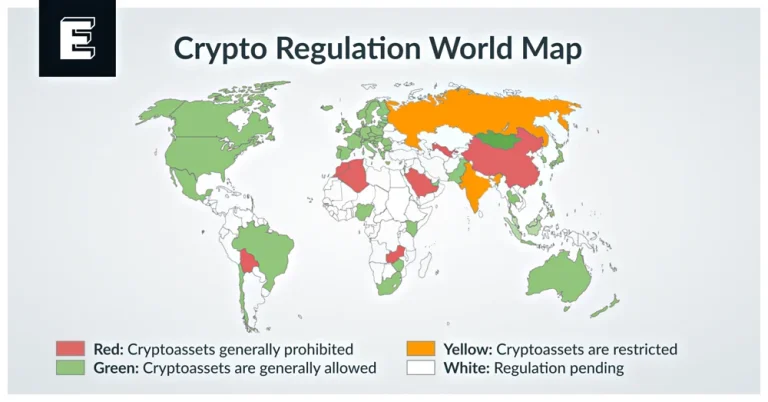
Following the FTX collapse, regulators worldwide increased their focus on crypto. The SEC sued Binance and Coinbase, while also issuing key rulings (like the XRP decision clarifying that programmatic sales are not securities). Bitcoin recovered, climbing back above $40,000.
Layer 2 solutions like Arbitrum and Optimism gained significant adoption, and ZK-rollups (zkSync, StarkNet) progressed toward maturity.
2024: Bitcoin Halving and ETFs
In a historic development, the US Securities and Exchange Commission approved spot Bitcoin ETFs in January 2024, allowing mainstream investors to gain exposure to Bitcoin through traditional brokerage accounts. This marked a major step in institutional adoption.
The fourth Bitcoin halving occurred in April 2024, reducing block rewards to 3.125 BTC.
Ethereum continued its upgrade path, with EIP-4844 (Proto-Danksharding) implemented to reduce Layer 2 fees.
Key Milestones Timeline
| Year | Event |
|---|---|
| 2008 | Bitcoin whitepaper published by Satoshi Nakamoto |
| 2009 | Genesis block mined, Bitcoin network launches |
| 2010 | First real-world transaction (10,000 BTC for pizza) |
| 2011 | Litecoin launched, first altcoins appear |
| 2013 | Bitcoin first reaches $1,000; Mt. Gox collapse begins |
| 2015 | Ethereum launches |
| 2017 | Bitcoin hits $20,000; ICO boom and bust |
| 2020 | DeFi Summer; Uniswap airdrop |
| 2021 | Bitcoin hits $69,000; NFT explosion; El Salvador adopts Bitcoin |
| 2022 | Terra/LUNA collapse; FTX fraud and bankruptcy |
| 2023 | SEC lawsuits; XRP ruling; L2 adoption grows |
| 2024 | Spot Bitcoin ETFs approved; Bitcoin halving; EIP-4844 |
The Philosophical Journey
The history of cryptocurrency is not just about technology and prices—it’s about ideas:
- 2008-2013: The dream of peer-to-peer electronic cash, free from government control.
- 2014-2017: The vision of a world computer, programmable money, and decentralized applications.
- 2018-2020: The building of financial infrastructure—DeFi—to create an open financial system.
- 2021-present: The tension between the original cypherpunk ideals and mainstream adoption, institutional involvement, and regulation.
Conclusion
From a mysterious whitepaper in 2008 to a multi-trillion-dollar asset class traded on Wall Street, the history of cryptocurrency is remarkable. It’s been marked by incredible innovation, devastating crashes, scams, and genuine breakthroughs that could reshape finance.
The story is far from over. As blockchain technology continues to evolve, as regulators grapple with how to handle it, and as more people around the world gain access, the next chapters of crypto history promise to be just as fascinating as the first.
Disclaimer: This article is for informational purposes only and represents a general historical overview. Cryptocurrency investments carry risk. Always do your own research.