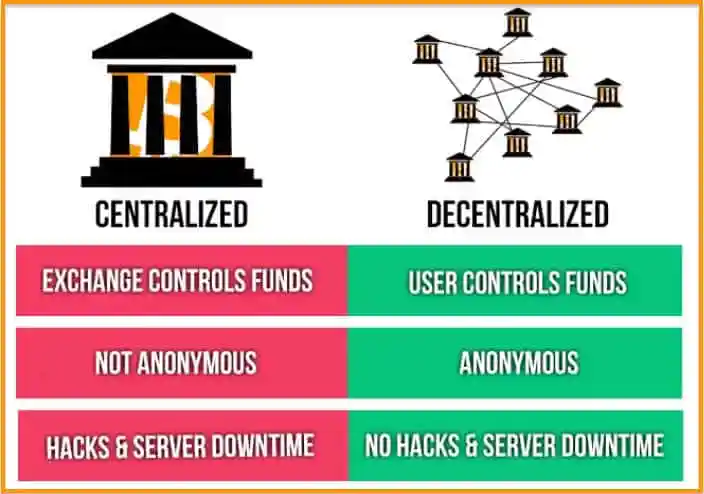
If you want to buy, sell, or trade cryptocurrencies, you need an exchange. But not all exchanges are created equal. The most fundamental distinction in the crypto trading world is between centralized exchanges (CEXs) and decentralized exchanges (DEXs).
Each type has its own philosophy, advantages, and trade-offs. One prioritizes ease of use and liquidity; the other prioritizes control and privacy. Understanding the difference is essential for anyone navigating the crypto ecosystem. This guide compares CEXs and DEXs to help you choose the right platform for your needs.
The Basic Difference: Who Controls Your Funds?
At its core, the difference between CEXs and DEXs comes down to one question: who holds your private keys?
- On a centralized exchange (CEX), the exchange holds your private keys. You deposit funds into an account controlled by the company, and they custody your assets for you.
- On a decentralized exchange (DEX), you hold your private keys. You trade directly from your self-custodial wallet, and the exchange never takes custody of your funds.
This single difference ripples through every aspect of how these platforms work—from user experience to security to regulatory compliance.

Centralized Exchanges (CEX)
Centralized exchanges are the most common way people buy and sell cryptocurrency. They’re operated by companies that act as intermediaries between buyers and sellers. Think of Coinbase, Binance, Bybit, Kraken, and OKX.
How CEXs Work
- You create an account and complete identity verification (KYC – Know Your Customer).
- You deposit funds (traditional currency or crypto) into an account on the exchange.
- The exchange holds your funds in its own wallets (custodial).
- You place orders to buy or sell, and the exchange matches you with other users using an order book.
- When you want to withdraw, you request the exchange to send crypto to your personal wallet.
The exchange maintains the order book, matches buyers and sellers, and facilitates the trade. For this service, they charge fees.
Advantages of CEXs
- User-Friendly: Interfaces are designed for ease of use, making them ideal for beginners. You don’t need to understand private keys, gas fees, or blockchain mechanics.
- High Liquidity: Large user bases mean you can usually buy or sell instantly at fair prices with minimal slippage.
- Fiat On-Ramps: Easy ways to deposit traditional currency via bank transfer, credit card, or debit card.
- Customer Support: If something goes wrong, you can contact the company for help.
- Advanced Features: Many offer margin trading, futures, staking, lending, and other products.
- Speed: Transactions are processed instantly within the exchange’s internal database.
Disadvantages of CEXs
- Custodial Risk: You don’t control your private keys. If the exchange is hacked, goes bankrupt, or freezes withdrawals, you could lose your funds. History is littered with examples: Mt. Gox, FTX, and others.
- Privacy Concerns: You must provide personal information (ID, address, sometimes selfies) for KYC. This data can be leaked or sold.
- Censorship: The exchange can freeze your account or block transactions if it chooses or if required by regulators.
- Single Point of Failure: The exchange’s servers could go down, or the company could face regulatory issues, preventing you from accessing your funds.
- Higher Fees (sometimes): While volume traders get low fees, casual users often pay significant spreads and fees.
Examples: Coinbase, Binance, Bybit, Kraken, OKX, Gate.io, Bitget, MEXC.
Decentralized Exchanges (DEX)
Decentralized exchanges operate without a central company. They’re peer-to-peer marketplaces built on smart contracts, usually on blockchains like Ethereum or Solana.
How DEXs Work
Most modern DEXs use a model called Automated Market Maker (AMM), popularized by Uniswap. Instead of matching buyers and sellers through an order book, they use liquidity pools.
- Liquidity providers deposit pairs of tokens (like ETH and USDC) into smart contract pools, earning fees from trades.
- Traders connect their self-custodial wallet (like MetaMask or Phantom) to the DEX.
- They select the tokens they want to swap. The DEX calculates the price based on a mathematical formula (x*y=k) from the pool’s ratio.
- The trade executes directly from their wallet—funds never go to the DEX itself.
- The smart contract updates the pool balances and distributes fees to liquidity providers.
Some DEXs (like dYdX or Serum) use order books, but they’re less common due to the difficulty of running order books on-chain.
Advantages of DEXs
- Non-Custodial: You always control your private keys. Funds never leave your wallet until a trade executes. No central entity can freeze your assets.
- Privacy: No KYC required. You only need a wallet address. Your identity isn’t tied to your trading activity.
- Censorship-Resistant: No company can block your trades or freeze your account. As long as the blockchain is running, you can trade.
- Global Access: Anyone with an internet connection and a wallet can use them, regardless of location.
- Transparency: All transactions are on-chain and visible. Smart contract code is public and auditable.
- Innovation: DEXs are where much of DeFi innovation happens—yield farming, liquidity mining, and new trading mechanisms.
Disadvantages of DEXs
- Complexity: Interfaces can be intimidating for beginners. You need to understand wallets, private keys, gas fees, and network selection.
- No Fiat On-Ramps: You can’t deposit dollars directly. You need to already have crypto (which you probably bought on a CEX).
- Lower Liquidity (for some pairs): For less popular tokens, it may be hard to trade without significant price slippage.
- Smart Contract Risk: Bugs in the DEX’s code could lead to loss of funds. Hacks of DEXs and bridges are common.
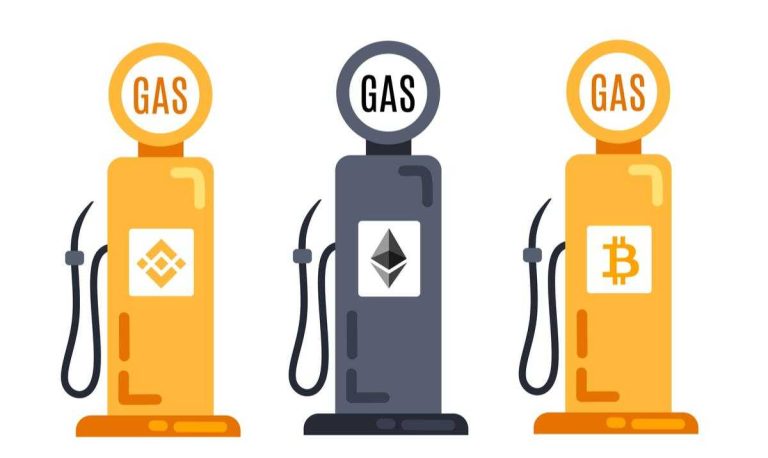
- Gas Fees: On Ethereum-based DEXs, you pay network fees (gas) for every trade. During congestion, these can be high.
- Permanent Loss: If you’re a liquidity provider, you risk impermanent loss when token prices diverge.
- No Customer Support: If you make a mistake (send to wrong address, get scammed), there’s no one to call.
Examples: Uniswap (Ethereum), Jupiter (Solana), PancakeSwap (BNB Chain), Curve (Stablecoins), Balancer, dYdX.
CEX vs DEX: Head-to-Head Comparison
| Feature | Centralized Exchange (CEX) | Decentralized Exchange (DEX) |
|---|---|---|
| Custody | Exchange holds your funds (custodial) | You hold your funds (non-custodial) |
| Private Keys | Controlled by exchange | Controlled by you |
| KYC/Identity | Usually required | Not required (pseudonymous) |
| Fiat On-Ramp | Yes (bank, credit card) | No (need crypto first) |
| Trading Speed | Instant (internal matching) | Depends on blockchain (seconds to minutes) |
| Fees | Trading fees + withdrawal fees | Gas fees + DEX trading fees (usually lower) |
| Liquidity | Very high for major pairs | Varies; can be low for obscure tokens |
| Asset Selection | Curated by exchange | Anyone can list (long tail of tokens) |
| Censorship Resistance | Low (exchange can freeze accounts) | High (no central control) |
| Counterparty Risk | Exchange could be hacked or go bankrupt | Smart contract risk |
| Customer Support | Available (varies by exchange) | None (you’re responsible) |
| User Experience | Beginner-friendly | Requires learning curve |
| Examples | Coinbase, Binance, Bybit, Kraken | Uniswap, Jupiter, PancakeSwap |
Security Considerations
Both types of exchanges have security risks, but they’re different in nature.
CEX Security Risks
- Exchange Hacks: If the exchange’s centralized servers are breached, funds can be stolen. History: Mt. Gox (850,000 BTC), FTX (customer funds misused), numerous others.
- Insider Threats: Employees or executives can misuse funds (as allegedly happened at FTX).
- Regulatory Seizure: Governments can force exchanges to freeze or seize assets.
- Bank Runs: If confidence collapses, everyone rushes to withdraw, and the exchange may not have sufficient liquid funds.
Mitigation: Choose exchanges with strong track records, Proof of Reserves, insurance funds, and regulatory compliance. But remember: even “safe” exchanges can fail.
DEX Security Risks
- Smart Contract Bugs: Code vulnerabilities can be exploited. DEXs and bridges are frequent targets.
- Impermanent Loss: For liquidity providers, not a hack but a financial risk.
- Front-Running: In some DEXs, bots can see pending transactions and front-run them.
- User Error: Sending to wrong address, interacting with malicious contracts, losing private keys.
Mitigation: Use well-audited, established DEXs. Start with small amounts. Understand what you’re doing before providing liquidity.
Which One Should You Use?
The answer depends on your needs and preferences. Most crypto users actually use both.
Use a CEX if:
- You’re a beginner buying crypto for the first time.
- You need to convert fiat currency (USD, EUR) to crypto.
- You want to trade with high liquidity and low slippage.
- You want access to advanced features like margin or futures.
- You prefer having customer support if something goes wrong.
- You’re in a jurisdiction where DEXs are restricted or you’re uncomfortable with self-custody.
Use a DEX if:
- You already have crypto and want to trade without giving up control.
- You value privacy and don’t want to submit KYC.
- You want access to new or obscure tokens that aren’t listed on CEXs.
- You’re participating in DeFi (yield farming, providing liquidity).
- You believe in the “not your keys, not your coins” philosophy.
- You’re in a country with restricted access to CEXs.
The Hybrid Approach: Using Both
Many experienced users combine both types:
- On-ramp with a CEX: Use Coinbase or another regulated CEX to deposit fiat and buy your initial crypto (BTC, ETH, or SOL).
- Withdraw to self-custody: Move your crypto to a hardware wallet or self-custodial software wallet.
- Trade on DEXs: Use DEXs for further trading, accessing new tokens, or participating in DeFi.
This gives you the best of both worlds: the easy on-ramp of CEXs and the control and access of DEXs.
The Future: Convergence or Coexistence?
The line between CEXs and DEXs is blurring:
- CEXs adding self-custody: Some CEXs now offer self-custodial wallets integrated with their platforms (e.g., Bybit Web3 wallet, OKX Wallet).
- DEXs improving UX: DEX interfaces are becoming more user-friendly, abstracting away some complexity.
- Regulated DEXs: Some DEXs are exploring KYC solutions to comply with regulations while maintaining decentralization.
- Hybrid models: Exchanges that offer both custodial and non-custodial options from a single interface.
Both models will likely coexist, serving different user needs. CEXs will dominate for beginners and fiat on-ramps. DEXs will continue to grow for those who prioritize control, privacy, and access to the long tail of crypto assets.
Conclusion
The choice between centralized and decentralized exchanges isn’t about which is “better”—it’s about which is better for you and your specific use case. CEXs offer convenience, liquidity, and customer support. DEXs offer control, privacy, and access to the full crypto ecosystem.
Understanding the trade-offs helps you make informed decisions about where to trade and how to secure your assets. And remember the golden rule: for long-term holdings, always move your crypto to a wallet where you control the private keys—whether you bought it on a CEX or a DEX.
Disclaimer: This article is for informational purposes only and does not constitute financial advice. Both CEXs and DEXs involve risk. Always do your own research.