Блог

  • Ex-employee of Baidu convicted for mining on company servers

    Ex-employee of Baidu convicted for mining on company servers

    An ex-employee of the Chinese company Baidu was convicted with three years in prison and a 1 568$ fine for mining the Monero cryptocurrency on company servers in 2018.

    According to the report published by the local publication Abacus, Chief Engineer An Bang, who was working on a popular search engine named Baidu, got three years of prison and a fine of 15 668$. In the time between April and June 2018 he uploaded mining scripts to approximately 200 Baidu servers.

    However, the additional load on the system was noticed by the company, which reported it to the police, which ultimately led to Ban’s arrest. According to the report, Ban was convicted for three years in prison, as well as an 11 000 Yuan fine (1 568$) last month.

    This case has added to the pool of incidents when employees tried to mine cryptocurrency through the servers of their companies. Last month the Kyiv prosecutor’s office reported about an employee of the “Informational judicial systems” state enterprise, who unlawfully used company-issued equipment for mining. In September of last year an ex-employee of a Sarov-based nuclear center was fined for mining on a supercomputer, and in May the Australian Government Contractor was prosecuted for mining on duty. In 2018 a Chinese school principal was eliminated from the Communist Party for mining on duty, and Crimean ex-government officials were fined for a similar crime.

  • London’s analytics center Z/Yen Group sued the ADA cryptocurrency issuer because of disagreements in conducting of collective research

    London’s analytics center Z/Yen Group sued the ADA cryptocurrency issuer because of disagreements in conducting of collective research

    This was reported by Cardano’s leadership on their official website with an elaboration that the trial concerned the partnership concluded between Cardano Foundation and Z/Yen Group Limited in July 2017. Later the startup was forced to annul and end the partnership for a variety of reasons. Cardano isn’t opening up about the dispute details, however, it fully refutes their ex-partner’s claims, adding that it will not disclose such information until the conclusion of the trial.

    It is known that at the very end of 2017 Cardano Foundation became partners with Z/Yen Group to conduct collective research in apps regarding blockchain to expand the scope of Cardano and the ADA cryptocurrency. In addition to that, the companies were working on the implementation of the Distributed Futures program, designed to study blockchain, digital currencies and the technology of artificial intelligence. The program was led by the co-founder of the company Michael Mainelli, who later became head of the department of research at the Cardano Foundation.

    Mainelli believed that based on the results of the study on implementing different tools like smart registries, these tools could be implemented into different areas of activity, given that investors, government officials and regulators learn to use them. The assumption can be made that during the research Cardano and Y/Zen disagreed, and, as a result, a dispute arose which could only be settled in court. In January Cardano entered a partnership agreement with the PRIViLEDGE consortium for collective research and solution of the problems connected with using the technology of the distributed registry. Aside from that, last week the founder of Cardano Charles Hoskinson reported the conclusion of the research in the Hydra technology of sharding, which, in theory, can increase the capacity of the network to 1 million transactions per second.

  • Tezos Foundation, a nonprofit organization, sells around 8000 BTC in the second half of 2019. The money earned gets invested in different assets

    Tezos Foundation, a nonprofit organization, sells around 8000 BTC in the second half of 2019. The money earned gets invested in different assets

    Bitcoin’s share in Tezos Foundation’s storage has dropped from 61%, as of July last year, to 47%, as in January 2020, according to the organization’s reports. The money has been invested in different currencies and classes of assets, which include equities, stocks and fiat currencies. The fund has also upped its share from 15% to 23% by acquiring Tezos tokens (XTZ).

    As per the reports, Tezos Foundation owned around 397.7 000 000 USD worth of Bitcoin as of 31st of July 2019. As BTC cost 10000$ around that time, the fund had, as it appears, around 39700 BTC. In addition to that, as on January 31st 2020, the fund already had 31800 BTC translated to around 298.5 million USD, with one coin being worth 9400$.

    This information means that Tezos Foundation has sold 8000 BTC in the latter half of 2019, which, taking the diminished prices in the account, would be worth around 46 000 000 USD today. The general cost of the fund dropped from 652 000 000 USD as of July 31st to 625 million USD as of January 31st. The fund’s assets are managed through the strategy which was established and audited in coordination with the report issued by the Tezos Foundation Council, the organization’s leadership group.

    Tezos Foundation’s Chief of Finances Roman Schnider has said that, although he believes Bitcoin to be the “key means of keeping up cost”, his strategy of managing assets is to focus and accomplish long-term goals, “not getting distracted by the market’s short-term fluctuations”.

    Schnider added that the investment in the multiform range of funds and equities, as well as in cryptocurrencies, are tools of risk management, which ensure “operational efficiency” during the times of cryptocurrency’s volatility. Recently it became known that Tezos and Cosmos had become the more popular projects in Japan. Let us recall that Tezos Foundation gave away 37 million USD in grants to the developers of the Tezos ecosystem.

  • Zilliqa and Switcheo develop decentralized exchange Zilliqa DEX

    Zilliqa and Switcheo develop decentralized exchange Zilliqa DEX

    Cryptocurrency project Zilliqa and exchange Switcheo that supports trade tokens based on Ethereum, EOS и NEO are working to build the non-custodial decentralized exchange Zilliqa DEX.

    According to the developers initially on the new platform traders will be able to trade tokens Zilliqa (ZIL) in pairs with different digital assets based on Ethereum. Then, and as system exchange expanded, it will be added tokens based on EOS and NEO. Also, through integrating mobile money API users will not have to register at Zilliqa DEX for trading transactions.

    The developers also stated that a new platform will solve the problem faced by current decentralized exchanges. In particular, Zilliqa DEX will use the Uniswap exchange protocol along with atomic swaps for the automatic exchange of digital assets without centralized intermediaries. Also, the exchange will be used improved mechanisms for harmonizing off-chain the orders and pool algorithms for sustainable system Zilliqa DEX.

    The internal product testing with a minimum functionality will be completed by the end of the second quarter and in the third quarter the developers plan to organize an open test. Zilliqa estimates that a new decentralized platform will be ready by the end of this year. Amrit Kumar, the president and chief science officer of Zilliqa, means that cooperate with Switcheo would assist in developing the StraitsX stable coin and will reinforce the influence of startup in international system decentralized financing (Defi).

    In turn, Switcheo General Director Ivan Poon said that owing to the absence of the central administrative authority the decentralized exchange Zilliqa DEX will ensure a high level of safety of assets and users’ personal information. He added that using improved instruments the holders of tokens ZIL can constitute a new experience of trade. In last year Kyle Samani co-founder of Multicoin Capital cryptocurrency fund said that decentralized exchanges will be a trend in the 2019 year and may make for a very different digital industry.

  • South Korea would allocate about $360 million for the development of blockchain in the country

    South Korea would allocate about $360 million for the development of blockchain in the country

    Ministry of Science and also the Ministry of Information and Communication Technology of South Korea are preparing to launch a pilot program for the development of blockchain in the country.

    Under «Blockchain Technology Validation Support 2020» it is expected to be selected nine projects working with blockchain. They get 450 million won (about $360 000). Organizers of the program informed that startups will be selected according to the following criteria: the results of current performance, the possibilities for technical realization their concept in the future, the viability of the proposed technology and also a plan for the further development and the challenges, that needs to be done.

    Besides, departments were said that for participation in the project firms should offer such services in which mandatory use of blockchain and services would have economic and social value. It is known, that among startups selected to participate in the program five firms have already submitted their applications for registration of a patent. Nine firms have submitted their applications for registration of copyright and two firms have conducted investment round.

    «South Korea is committed to assisting the local startups to create a business model which works at the base blockchain, Internet of Things (IoT), artificial intelligence and big data. We must evolve rapidly in this area while the market of blockchain is still young», — said Minister of Science and Technology Park Yoon-kyu. South Korea not only implements blockchain in various spheres of action but also paves the way for work the cryptocurrency companies in the country. Earlier in the month, the parliament of South Korean passed the bill to regulate cryptocurrency. Besides, in the first half of this year Government planned to submit a new law under which individuals will be required to pay income tax on their earnings obtained from trading activity with cryptocurrency.

  • Fire blocks allow access to the Defi protocol for institutional users

    Fire blocks allow access to the Defi protocol for institutional users

    Kryptovut Security Company Fireblocks merged with Defi protocol in order to allow access to decentralized credits for institutional users.

    Now user’s Fireblocks can collect assets held by Hot Vault on Compound. And they can receive interest in the use of these funds to the lending of users. The company uses a multi-party computation protocol to ensure the safety of remittance.

    Also, institutional investors will see their funds in Hot Vault. It should be noted, whether hardware wallet or extensions like MetaMask are used usually to access to platforms such as Compound. In a corporate environment, these kinds of solutions usually are inappropriate.

    «If you are a retail investor with a few hundred bucks, there is no problem. But if you handle the big bucks, then you sure won’t want to transfer a few million dollars on MetaMask just for the job with Compound», — emphasized Kevin Yedid-Botton. It is the leader of Investment Company ParaFi, as a client of Fireblocks.

    Another client of Fireblocks, co-founder Amber Group Kevin Yedid-Botton supported the colleague. He noted that it would be unthinkable to the situation when people use MetaMask for trade millions of dollars of corporate funds.

    However, according to Kullande, Amber Group has not yet considered taking advantage of the new opportunities because of cheap money. On the Compound platform with credit in the ETH rate is just 0.01%. It should be reminded that on 8 March $2 534 760 in ETH was liquidated on Compound protocol. It is an all-time record since the start of the second version of the protocol in May last year.

  • Stock-market of Luxemburg and Credit Suisse launching platform “FundsDLT” based on Ethereum

    Stock-market of Luxemburg and Credit Suisse launching platform “FundsDLT” based on Ethereum

    Stock-market of Luxemburg in cooperation with Credit Suisse and other financial organizations getting started to launch a new investment platform “FundsDLT” based on Ethereum blockchain.

    On the creation of this system are working not just a stock-market but also its sub-company Fundsquare, Credit Suisse’s department for asset management of the bank, companies Clearstream and Natixis Investment Managers. Thankfully to distributed ledger technology (DLT), FundsDLT will eliminate the necessity of making extra financial activities for distributors, institutions that serve crypto-farms and save them huge amounts of money.

    “Credit Suisse, DLT and smart-contracts will simplify control over bills, processing of transactions and reporting about made spendings. Moreover, the system is using not just Ethereum blockchain but also privacy protocol Quorum for the highest level of security” — was said by one of the FundsDLT’s workers.

    The representative of the company has specified, that the company will focus on certain services that usually require intermediaries, but DLT will do the work faster and in much better quality. The operational HR of NIM (Natixis Investment Managers) Joseph Pinto has mentioned the necessity of blockchain’s introduction in the area of investments, which will let their owners see all the incomes and distributions of gotten money. By the way, developers of FundsDLT claimed about starting the financing of Serie A. Credit Suisse has started testing of the blockchain technology for processing of deals with investment funds since February of the last year, which is pretty successful. Later top-manager of Credit Suisse Emmanuel Aidoo claimed that the introduction of blockchain in the banking system and the financial area has been held back by bankers who want to save their “status quo”.

  • The biggest government newspapers blockchain base was hacked in Argentina

    The biggest government newspapers blockchain base was hacked in Argentina

    “Our own newspaper’s system, which is based on blockchain, was hacked and used for spreading fake news about coronavirus” — was admitted in Boletin Oficial, the official informative recourse of Argentina’s government.

    Local resource El Cronista has told about a group of people who tried to hack the newspaper’s system but faced the only failure. However, they found a weak spot in the core, which did let them add some fake news about coronavirus pandemic. Also, there were added some instructions for government workers about their actions while the emergency because of terrifying illnesses (coronavirus). Soon, just after it was noticed by the company’s workers, the website Boletin Oficial was shut down for a few hours.

    This informative resource is main in the country and belongs to Argentina’s government. Moreover, after decree No 207/2016 its digital version (web-site) became part of governmental’s property. Nowadays each new accepted law or decree by the government has been publishing in Boletin Oficial.

    The most interesting and confusing part of this story is that this article still can be found on the official site. Looks like people, who are in charge of the country and newspaper has decided to leave this fake news and legalize it.

    The blockchain platform used by Boletin Oficial is the part of Argentina’s national project called “Blockchain Federal Argentina”. This project has been made especially for government and private companies. By the way, at the beginning of March, the system which is used for registration of new companies will be shut down one more time for 180 days. Official reason — create some improvements to make the site safer and more perfect.

  • Central Bank of Sweden is going to stand in charge of the BIS initiation. Government cryptocurrency study

    Central Bank of Sweden is going to stand in charge of the BIS initiation. Government cryptocurrency study

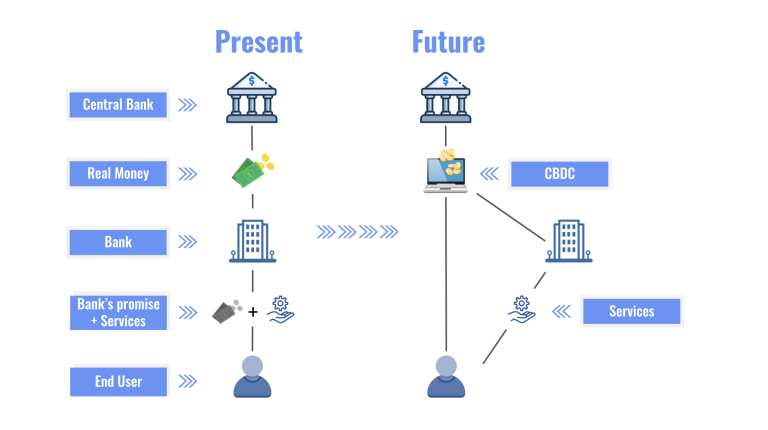
    CB of Sweden awaits permission from the parliament and of the BIS (Bank of International Settlements) for creating of Innovation Center for studying cryptocurrency.

    The request for placing BIS on the territory of the country was earlier published by the government. The goal of this initiative is to learn and understand the new important trends in the area of technologies, which is important for banks in our days. Also, it has to become a coordination center for workers of banks in the area of innovations.

    One of the main center’s goals is the development of the government’s cryptocurrency. By the way, one month ago Central Bank has started the testing of its digital currency. That is the main reason why BIS must be placed there. Due to that chief of the CB think that their bank has a huge advantage in front of other competitors.

    Center of the Bank’s innovations in the area of settlements is not just a private organization but the official branch of BIS. Moreover, workers of this organization are protected from political persecution of Swedish courts. In request of the CD of Sweden was said:

    “Including that the CB has already passed a long way in the analysis of government’s cryptocurrency it can provide to BIS all their known information based on cooperation between government and private sectors, scientists and other central banks if BIS demands it”.

    Many of other Swedish banks have been studying the concept of creation of their cryptocurrency, but CB has gone far away ahead from them. Central Bank started studying this area of technologies in 2017 because most of the population rapidly had started using wireless payments instead of traditional payments in cash.

    For past years CB achieved huge progress so that in February they started testing their own official government’s cryptocurrency — digital crone. Bank of Sweden thinks that they are the only ones enough developed organization in the country which can become a Center of innovation so that they are keep asking parliament and BIS about that.

    Center of innovations BIS

    It is obvious that CI (Center of innovation) must be sponsored. CB requires parliament about 30 million crones per year during the next 5 years for their work in this area. This sum is approximately 50% of all CB’s dividends on BIS shares. (CB owns 3.2% of BIS’ shares).

    However, people still want to get rid of cash-money in the advantage of bank cards, wireless payments, and cryptocurrencies regardless of will CI be in the country or will not.

    Right now are pretty difficult times for both CB and BIS, what’s getting only worse due to peculiar “wars for CI” between banks inside of Sweden. At the beginning of this month, BIS had published an article about rapid changes in the system of payments in the world. Mostly the article was devoted to P2P-payments, token-shares and government’s cryptocurrencies.

    In the report of BIS was mentioned that any kind of initiations of stablecoins is a real danger for the influence of CBS on monetary politics and financial stability. All researches of this organization have admitted the necessity of global reactions on Libra initiation. During the previous few months, all central banks raised questions about the country’s cryptocurrency. In January all six central banks in cooperation with BIS created a special group for researches of cryptocurrencies, and are planning to discuss a possibility of release of their own one in April.

  • Binance is going to invest $50 million to help India’s cryptocurrency ecosystem develop

    Binance is going to invest $50 million to help India’s cryptocurrency ecosystem develop

    Binance stock exchange has created a foundation with $50m capital to support the development of the cryptocurrency ecosystem in India.

    Binance and the local WazirX stock exchange acquired by them in November of 2019 has launched a program called «Blockchain for India». Startups specialized in the Indian cryptocurrency industry and blockchain can become its members.

    They plan to invest money by acquiring shares in Indian startups or by buying their tokens. Projects capable of developing a full-scale infrastructure for cryptocurrency trading will be their main target. Such projects include fiat channels, payment platforms, stablecoins and decentralized finance applications. Binance is planning to invest from $100 000 to $5m per startup.

    WazirX founder and CEO Nischal Shetty noted that India contains a great amount of developers, and his foundation will help to unlock the «incredible potential of blockchain ecosystem».

    He said that Binance is glad to co-operate with local foundations that are sharing their goals.

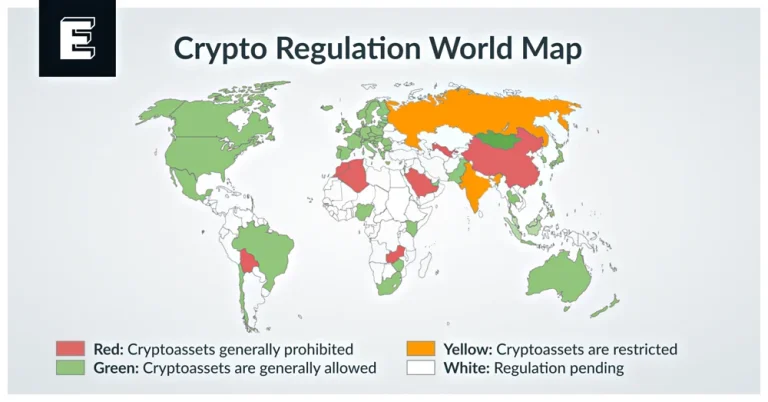
    At the same time, a project aimed at sharing the knowledge about blockchain technology in studying institutions will be developed. At the beginning of March, it became known that the Supreme Court of India lifted the ban on cryptocurrency operations, established by the Central Bank in April of 2018.