How do thousands of computers around the world agree on the state of a blockchain without a central authority? How does the network prevent double-spending—someone spending the same coins twice? The answer lies in consensus mechanisms.
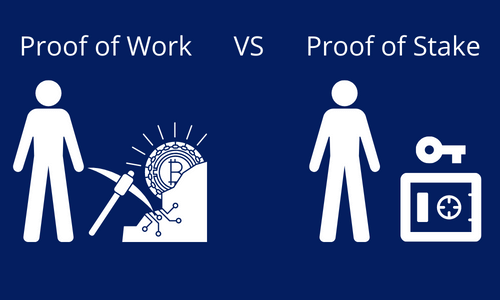
Think of a consensus mechanism as the rulebook that all participants in a blockchain network agree to follow. It’s how they reach agreement (consensus) on which transactions are valid and what the official history looks like. The two most important consensus mechanisms are Proof-of-Work (PoW) and Proof-of-Stake (PoS).
This guide explains both systems, how they work, their strengths and weaknesses, and why the crypto world is increasingly shifting toward Proof-of-Stake.
The Problem: The Byzantine Generals’ Problem
Before diving into the solutions, it helps to understand the problem. In computer science, there’s a famous puzzle called the Byzantine Generals’ Problem.
Imagine several Byzantine army divisions camped outside an enemy city, each led by a general. They need to agree on a plan—attack or retreat. But the generals are separated and can only communicate via messengers. Some generals might be traitors, sending false messages to confuse the others. How can the loyal generals guarantee they all agree on the same plan?
This is essentially the problem that decentralized blockchains solve. The network has many participants (nodes) that don’t trust each other. Some might be malicious. Yet they must all agree on a single, true version of the transaction history. Consensus mechanisms provide the solution.

What is Proof-of-Work (PoW)?
Proof-of-Work is the original consensus mechanism, first implemented by Bitcoin in 2009. It’s the reason “mining” exists.
How Proof-of-Work Works
In a PoW system, participants called miners compete to add the next block of transactions to the blockchain. Here’s the process:
- Gather Transactions: Miners collect pending transactions from the network and assemble them into a candidate block.
- Solve a Puzzle: Miners race to solve an extremely complex mathematical puzzle. The puzzle involves finding a specific number (called a nonce) that, when combined with the block’s data and run through a hash function, produces a result that meets certain criteria (e.g., starts with a certain number of zeros).
- Show Your Work: This puzzle requires massive computational power and energy to solve. It’s like a lottery where the more computing power you have, the more tickets you get.
- Broadcast the Solution: The first miner to find a valid solution broadcasts their block to the network.
- Verification: Other nodes quickly verify that the solution is correct. If it is, they add the block to their copy of the blockchain.
- Reward: The winning miner receives newly created bitcoins (the block reward) plus transaction fees.
The “work” in Proof-of-Work is this computational effort. It’s deliberately hard to produce a valid block but easy for others to verify. This asymmetry is key to the system’s security.
Why Proof-of-Work is Secure
PoW provides security through economic disincentive. To attack the network (e.g., try to reverse transactions or double-spend), an attacker would need to control more than 50% of the network’s total computing power—a 51% attack. This would require purchasing massive amounts of expensive mining hardware and paying for enormous amounts of electricity. The cost is so prohibitive that it’s not worth attempting on large, established PoW networks like Bitcoin.
Advantages of Proof-of-Work
- Proven Security: Bitcoin’s PoW has secured billions of dollars in value for over a decade without being successfully hacked.
- Simple Incentives: The economics are straightforward—miners invest in hardware and electricity for a chance to earn rewards.
- Fair Distribution: New coins are distributed to those who contribute computational resources.
Disadvantages of Proof-of-Work
- Energy Consumption: PoW requires enormous amounts of electricity. Bitcoin’s annual energy consumption rivals that of some small countries.
- Hardware Centralization: Mining has become dominated by large companies with specialized ASIC hardware, making it difficult for individuals to participate.
- Slow Transaction Speed: Bitcoin processes about 7 transactions per second, far slower than centralized systems like Visa.
- Electronic Waste: Mining hardware becomes obsolete quickly, generating significant e-waste.
What is Proof-of-Stake (PoS)?
Proof-of-Stake emerged as an alternative to PoW’s energy-intensive approach. Instead of miners competing with computational power, PoS networks rely on validators who lock up (stake) their own coins as collateral.
How Proof-of-Stake Works
In a PoS system (using Ethereum’s model as an example):
- Become a Validator: To participate, you must deposit (stake) a certain amount of the network’s cryptocurrency—32 ETH for Ethereum—into a smart contract. This stake acts as good behavior collateral.
- Random Selection: The protocol randomly selects a validator to propose the next block. The probability of being selected is generally proportional to the amount staked (more stake = higher chance).
- Propose and Vote: The selected validator proposes a block of transactions. Other validators then vote on whether the block is valid.
- Attestation: Validators who agree with the block broadcast their “attestation” (approval).
- Finality: Once enough attestations are collected, the block is added to the blockchain.
- Rewards and Penalties: Validators who propose and attest to valid blocks earn rewards (in the form of additional coins). Validators who act maliciously or are frequently offline can have their staked coins slashed (partially destroyed).
There’s no mining, no expensive hardware, and no massive electricity consumption. The security comes from the economic stake—validators have something to lose.
Why Proof-of-Stake is Secure
In PoS, an attacker would need to acquire a majority of the staked coins (33%+ to disrupt consensus, 66%+ to control it). This would require buying enormous amounts of the cryptocurrency. If they then attacked the network, the value of their own holdings would likely crash, making the attack economically self-defeating. Additionally, if they’re caught attacking, their stake can be slashed—they lose their money. This is called crypto-economic security.
Advantages of Proof-of-Stake
- Energy Efficient: PoS consumes >99% less energy than PoW. Ethereum’s move to PoS reduced its energy consumption by ~99.95%.
- Lower Barriers to Entry: You don’t need expensive mining hardware. Anyone with the required stake can participate (or join a staking pool with smaller amounts).
- Better Scalability: PoS networks can process transactions faster and are more amenable to scaling solutions like sharding.
- Economic Security: Attackers are penalized directly in the currency, making attacks economically irrational.
Disadvantages of Proof-of-Stake
- Complexity: PoS mechanisms are more complex than PoW, with more potential for unforeseen bugs or vulnerabilities.
- “Nothing at Stake” Problem (mostly solved): In early PoS designs, validators might be incentivized to vote on multiple competing chains. Modern PoS (like Ethereum’s) includes slashing conditions that penalize this behavior.
- Wealth Concentration: Critics argue that PoS favors the rich (“the rich get richer”), since those with more coins earn more rewards. However, the same could be said of PoW, where those with more capital buy more hardware.
- Initial Distribution: PoS networks must solve the “initial distribution” problem—how to fairly distribute coins at the start. PoW allows anyone to mine from day one.
Proof-of-Work vs Proof-of-Stake: Head-to-Head Comparison
| Feature | Proof-of-Work (PoW) | Proof-of-Stake (PoS) |
|---|---|---|
| Participants | Miners (with computational hardware) | Validators (with staked coins) |
| Resource | Electricity, hardware (ASICs, GPUs) | Staked cryptocurrency |
| Energy Consumption | Very high (country-level for Bitcoin) | Very low (99%+ less than PoW) |
| Entry Barrier | High (expensive hardware, cheap electricity) | Medium (requires minimum stake, but pooling possible) |
| Security Model | Cost of hardware + electricity | Economic stake (coins at risk of slashing) |
| Block Finality | Probabilistic (wait for more blocks) | Deterministic (final after certain conditions) |
| Rewards | Block subsidy + fees (to miners) | Block rewards + fees (to validators) |
| Examples | Bitcoin, Litecoin, Dogecoin (pre-merge Ethereum) | Ethereum (post-merge), Solana, Cardano, Polkadot |
The Merge: Ethereum’s Historic Transition
The most significant event in consensus mechanism history was Ethereum’s Merge in September 2022. Ethereum, originally a PoW network, successfully transitioned to PoS. This was like changing an airplane’s engine mid-flight.
The results were dramatic:
- Energy consumption dropped by ~99.95%. Ethereum went from using as much electricity as a medium-sized country to using less than a small town.
- New ETH issuance dropped by ~90%. PoS rewards are much lower than PoW mining rewards, making ETH potentially deflationary.
- Security remained robust. The transition happened without issues, proving that PoS can secure one of the world’s largest blockchain networks.
The Merge proved that PoS is not just theoretical—it’s a viable, secure, and vastly more efficient alternative to PoW.
Other Consensus Mechanisms
While PoW and PoS dominate, other mechanisms exist:
- Delegated Proof-of-Stake (DPoS): Users vote for delegates who validate transactions (e.g., EOS, Tron).
- Proof-of-Authority (PoA): Transactions are validated by approved accounts (validators) with known identities. Used in private networks and some sidechains.
- Proof-of-History (PoH): Solana’s unique mechanism that timestamps transactions before they’re included in blocks, enabling high speed.
- Proof-of-Burn: Miners “burn” coins (send them to an unspendable address) to earn the right to mine.
Which One is Better?
There’s no absolute answer—it depends on priorities:
- For maximum long-term security and simplicity: Proof-of-Work has an unparalleled track record. Bitcoin’s PoW has never been hacked.
- For energy efficiency, scalability, and modern features: Proof-of-Stake is clearly superior. Most new blockchain projects choose PoS.
- For decentralization of consensus: PoW mining has become centralized in industrial mining farms. PoS also has centralization risks (large staking pools). Neither is perfect.
The trend is clear: the industry is moving toward Proof-of-Stake. Ethereum’s successful transition, the rise of PoS chains like Solana and Cardano, and increasing environmental concerns all point in this direction. However, Bitcoin remains committed to PoW, and for many, that’s a feature, not a bug.
Conclusion
Proof-of-Work and Proof-of-Stake are two fundamentally different approaches to solving the same problem: how to achieve decentralized consensus without a central authority.
PoW uses computational work and energy to secure the network. It’s simple, battle-tested, but energy-intensive. PoS uses economic stakes and penalties. It’s efficient, scalable, but more complex.
Understanding these mechanisms is essential for anyone serious about cryptocurrency. They’re not just technical details—they shape the security, economics, and environmental impact of every blockchain network.
Disclaimer: This article is for informational purposes only and does not constitute financial advice.