If you’ve ever used Ethereum or any blockchain that supports smart contracts, you’ve encountered gas fees. They’re the costs you pay to make transactions, swap tokens, or interact with dApps. And sometimes, they can be shockingly high—$50, $100, or even more during peak congestion.
But what exactly are gas fees? Why do they exist? Why do they fluctuate so wildly? And is there any way to pay less? This guide explains everything you need to know about gas fees, how they work, and how to navigate them.
What are Gas Fees?
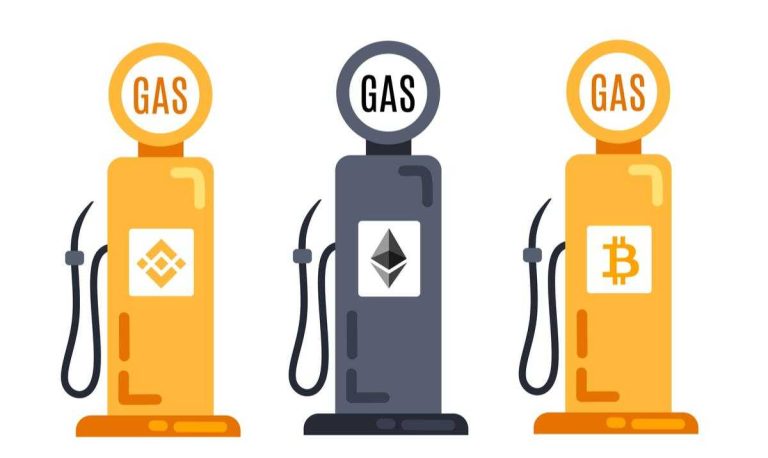
Gas fees are payments made by users to compensate for the computational energy required to process and validate transactions on a blockchain. Think of it like paying for fuel in a car—you need gas to make your transaction move.
On Ethereum, gas fees are paid in the native currency, Ether (ETH), though they’re usually measured in smaller units called gwei (1 gwei = 0.000000001 ETH).
Every operation on Ethereum—sending ETH, transferring a token, swapping on Uniswap, minting an NFT—requires computational resources. Miners (or validators, post-Merge) need to be compensated for providing those resources. Gas fees are that compensation.

Why Do Gas Fees Exist?
Gas fees serve two critical purposes:
1. Preventing Spam and DDoS Attacks
If transactions were free, malicious actors could flood the network with millions of meaningless transactions, clogging it and preventing legitimate users from transacting. By attaching a cost to every transaction, gas fees make such attacks economically prohibitive.
2. Compensating Miners/Validators
Miners (Proof-of-Work) and validators (Proof-of-Stake) dedicate computing resources to secure the network and process transactions. Gas fees (along with block rewards) compensate them for this work.
Gas fees also create a market for block space. When demand is high, users who are willing to pay more get their transactions processed faster—an efficient way to allocate limited resources.
How Gas Fees Are Calculated
Gas fees on Ethereum are determined by two factors: gas used and gas price.
1. Gas Used
Different operations require different amounts of computational work, measured in gas units. Simple transactions (sending ETH) use less gas (21,000 units). Complex operations (swapping tokens, interacting with smart contracts) use more gas (often 100,000+ units).
The gas used is fixed by the protocol based on the operation’s complexity. You can’t change this—it’s baked into the Ethereum code.
2. Gas Price
The gas price is how much you’re willing to pay per unit of gas, usually measured in gwei. This is where you have control. A higher gas price means miners/validators are more likely to prioritize your transaction.
Your total fee = gas used × gas price.
Example: A simple ETH transfer uses 21,000 gas. If you set a gas price of 30 gwei, your fee is 21,000 × 30 = 630,000 gwei = 0.00063 ETH. At ETH price of $2,000, that’s about $1.26.
EIP-1559: The Fee Market Upgrade
In August 2021, Ethereum implemented EIP-1559, a major change to how gas fees work. Before EIP-1559, users made blind bids, and miners included the highest-paying transactions. This led to unpredictable fees and overpayment.
EIP-1559 introduced a new fee structure with two components:
Base Fee
The base fee is the minimum fee required to get a transaction included in a block. It’s set algorithmically by the protocol based on network congestion. When blocks are more than 50% full, the base fee increases; when they’re less full, it decreases. The base fee is burned (destroyed), removing ETH from circulation.
Priority Fee (Tip)
The priority fee (or tip) is an optional extra payment to validators to incentivize them to include your transaction faster. This is like a bribe to jump the queue.
With EIP-1559, users can specify the maximum fee they’re willing to pay. The wallet calculates the current base fee and suggests a priority fee. This makes fees more predictable and reduces overpayment.
Why Gas Fees Fluctuate
Gas fees can vary wildly, from pennies to hundreds of dollars. The main driver is network congestion.
Factors That Increase Gas Fees:
- High Demand: When many people are using Ethereum (e.g., during NFT mints, DeFi activity, market volatility), blocks fill up, and base fees rise.
- Popular dApps: A popular new game or protocol can spike demand.
- Arbitrage Bots: Automated trading bots compete for block space, driving up fees.
- MEV (Miner Extractable Value): Searchers compete to extract value from transactions, bidding up gas prices.
Factors That Decrease Gas Fees:
- Low Activity: Weekends, holidays, or quiet periods see lower fees.
- Layer 2 Adoption: As more activity moves to L2s, L1 congestion can decrease.
- Time of Day: US business hours often see higher fees; overnight can be cheaper.
You can track current gas fees on sites like Etherscan Gas Tracker, GasNow, or Blocknative.
Gas Fees on Different Blockchains
While we’ve focused on Ethereum, all blockchains have some form of transaction fees. They vary dramatically:
| Blockchain | Typical Fee (USD) | Notes |
|---|---|---|
| Ethereum (L1) | $1 – $50+ | Highly variable; can spike during congestion |
| Bitcoin | $0.50 – $10 | Based on transaction size in bytes, not complexity |
| Solana | $0.0002 – $0.001 | Extremely low, fractions of a penny |
| BNB Chain | $0.05 – $0.50 | Lower than Ethereum but can spike |
| Arbitrum (L2) | $0.01 – $0.50 | Much cheaper than Ethereum L1 |
| Optimism (L2) | $0.01 – $0.50 | Similar to Arbitrum |
| Polygon PoS | $0.01 – $0.10 | Very low, popular for gaming and NFTs |
| zkSync Era | $0.05 – $0.20 | ZK-rollup with low fees |
How to Minimize Gas Fees
Nobody likes paying high fees. Here are strategies to reduce what you pay:
1. Use Layer 2 Solutions
This is the most effective strategy. Move your assets to an L2 like Arbitrum, Optimism, or zkSync Era, and transact there. Fees are typically 10-100x lower than Ethereum L1.
2. Time Your Transactions
Gas fees follow patterns. They’re often lower on weekends, late at night (US time), and during holidays. Use gas trackers to identify low-fee periods.
3. Adjust Gas Price in Your Wallet
If you’re not in a hurry, you can set a lower gas price and wait. Your transaction will eventually be included when congestion eases. Most wallets let you choose between “fast,” “average,” and “slow” options.
4. Use Gas Tokens (Less Effective Post-EIP-1559)
Before EIP-1559, users could “store” gas when fees were low and “spend” it when fees were high using gas tokens like CHI or GST2. EIP-1559 made this less effective, but some opportunities still exist.
5. Batch Transactions
If you need to do multiple operations (e.g., approve and swap), use protocols that batch them into one transaction, paying gas only once.
6. Use Alternative Blockchains
If you don’t need Ethereum’s specific ecosystem, consider using a lower-fee chain like Solana, BNB Chain, or Avalanche.
7. Avoid Peak Times
Major NFT mints, DeFi launches, or market volatility can spike fees. Wait for the frenzy to pass.
Common Gas Fee Scenarios and Costs
Here’s roughly what different operations cost on Ethereum L1 (fees vary wildly, so these are ballpark figures):
- Send ETH: 21,000 gas → ~$1-5
- Send ERC-20 token: ~40,000-65,000 gas → ~$2-10
- Swap on Uniswap: ~150,000-300,000 gas → ~$10-50+
- Mint an NFT: ~200,000-500,000 gas → ~$15-100+
- Deposit to Aave/Compound: ~200,000-400,000 gas → ~$15-70+
- Create a new token contract: Millions of gas → $100+
On L2s, these same operations cost cents, not dollars.
The Future: EIP-4844 and Beyond
Ethereum’s roadmap includes upgrades to dramatically reduce L2 fees and eventually improve L1 scalability.
EIP-4844 (Proto-Danksharding)
This upgrade, expected in 2024, introduces a new transaction type that accepts “blobs” of data that L2s can post cheaply. Currently, L2s post compressed transaction data to L1 calldata, which is expensive. EIP-4844 will give L2s dedicated, cheap space, potentially reducing L2 fees by 10-100x.
Full Danksharding
Later, full sharding will further increase data availability, allowing L2s to scale even more.
The long-term vision: Ethereum L1 as a secure settlement layer, with L2s handling most user activity at low cost.
Common Gas Fee Mistakes
1. Running Out of Gas
If you set a gas limit too low for a complex transaction, it will fail, and you’ll lose the gas fees you paid. Most wallets estimate this automatically, but be careful when manually adjusting.
2. Not Having Enough ETH for Gas
To send USDT (an ERC-20 token), you need ETH to pay gas. Many beginners try to send tokens without ETH in their wallet and wonder why transactions fail. Always keep a small ETH balance for fees.
3. Overpaying in a Hurry
During congestion, it’s easy to overpay by setting too high a gas price. Check gas trackers to see what’s reasonable.
4. Forgetting About L2 Bridging Costs
Moving funds from L1 to L2 costs L1 gas fees (which can be high). But once there, transacting is cheap. Factor in the bridge cost when deciding whether to use L2s for small amounts.
Conclusion
Gas fees are an essential part of how Ethereum and other blockchains function. They prevent spam, compensate validators, and allocate scarce block space. While high fees can be frustrating, they’re a sign of demand—people are willing to pay to use these networks.
The good news is that you have options. Layer 2 solutions already offer dramatically lower fees, and future upgrades will make them even cheaper. By understanding how gas works, timing your transactions, and using L2s, you can minimize costs and make your crypto experience more pleasant.
Disclaimer: This article is for informational purposes only and does not constitute financial advice. Gas fees are volatile and unpredictable. Always check current rates before transacting.