In 2021, a digital artwork by an artist named Beeple sold for $69 million at Christie’s auction house. A few months later, a collection of pixelated punk characters called CryptoPunks started selling for millions of dollars each. Twitter’s founder Jack Dorsey sold his first tweet as a digital item for $2.9 million. What do all these have in common? They’re all NFTs—Non-Fungible Tokens.
NFTs became a global phenomenon, capturing attention from artists, collectors, celebrities, and skeptics alike. But beyond the headlines and hype, what actually is an NFT? How do they work, and why do people pay millions for something that anyone can view or download for free? This guide explains everything you need to know.
Fungible vs. Non-Fungible: Understanding the Difference
To understand NFTs, you first need to understand the concept of fungibility.
Fungible Items (Interchangeable)
Something is fungible if you can exchange it for another identical item and it doesn’t matter. A dollar bill is fungible—if you lend someone $10, you don’t care which specific $10 bill you get back. Bitcoin and Ether are fungible—one BTC is always equal in value to another BTC. They are interchangeable.
Non-Fungible Items (Unique)
Something is non-fungible if it’s unique and can’t be replaced with something identical. The Mona Lisa is non-fungible—you can’t swap it for another painting and have the same thing. A concert ticket is non-fungible—it’s for a specific seat at a specific event. A house is non-fungible—each property is unique.
An NFT is a digital token that represents something unique. No two NFTs are exactly alike, and one cannot be exchanged for another on a one-to-one basis. Each has distinct properties and ownership history recorded on the blockchain.

What Actually IS an NFT?
At its simplest, an NFT is a certificate of authenticity and ownership for a unique digital item, stored on a blockchain. The item itself could be anything digital:
- Digital artwork (images, GIFs)
- Music files or albums
- Videos or clips
- Virtual real estate in metaverse worlds
- In-game items (skins, weapons, characters)
- Tweets or social media posts
- Domain names
- Even physical assets represented digitally (like ownership of a watch or property)
When someone “mints” an NFT, they create a unique token on the blockchain (most commonly Ethereum) that is permanently linked to that specific digital item. The token contains metadata about the item and, crucially, records who owns it. This ownership history is public, transparent, and immutable.
Think of it like this: anyone can look at the Mona Lisa online, download a photo, and print it out. But only one person owns the original. Similarly, anyone can right-click and save an NFT image, but only the wallet that holds the NFT has provable ownership of the original token.
How Do NFTs Work? The Technology Behind Them
NFTs are created using smart contracts on blockchain platforms that support them. Here’s the technical breakdown:
1. Blockchain Platform
Most NFTs exist on the Ethereum blockchain, using standards like ERC-721 and ERC-1155. Other blockchains like Solana, Tezos, Flow, and Polygon also support NFTs, often with lower fees and faster transactions.
2. Smart Contracts
An NFT is created by a smart contract that assigns ownership and manages transfers. The contract ensures that the token is unique and cannot be duplicated. It also handles things like royalties—automatically sending a percentage of future sales back to the original creator.
3. Metadata and Storage
The NFT token itself is just a unique identifier on the blockchain. The actual digital file (the image, video, or music) is usually too large to store on-chain. Instead, the NFT contains a URL or reference to where the file is stored, ideally on a decentralized storage system like IPFS (InterPlanetary File System) to ensure it isn’t lost if a central server goes down.
4. Wallets and Marketplaces
NFTs are stored in cryptocurrency wallets that support them (like MetaMask or Phantom). You can view, buy, sell, and trade NFTs on marketplaces like OpenSea, Rarible, Blur, and Magic Eden.
Why Do NFTs Have Value?
This is the question skeptics ask most often. The answer lies in understanding what people value:
1. Scarcity and Provenance
An artist can create a digital artwork and mint it as an NFT with a limited edition (e.g., only 10 copies). The blockchain proves that these 10 are the official originals, and anyone can verify the chain of ownership back to the artist. This digital scarcity didn’t exist before NFTs—digital files could be copied infinitely with no way to distinguish an “original.”
2. Utility
Many NFTs provide utility beyond just ownership. A gaming NFT might be a powerful sword you can use in a game. A membership NFT might grant access to a private community or event. A metaverse NFT might be virtual land you can build on.
3. Community and Status
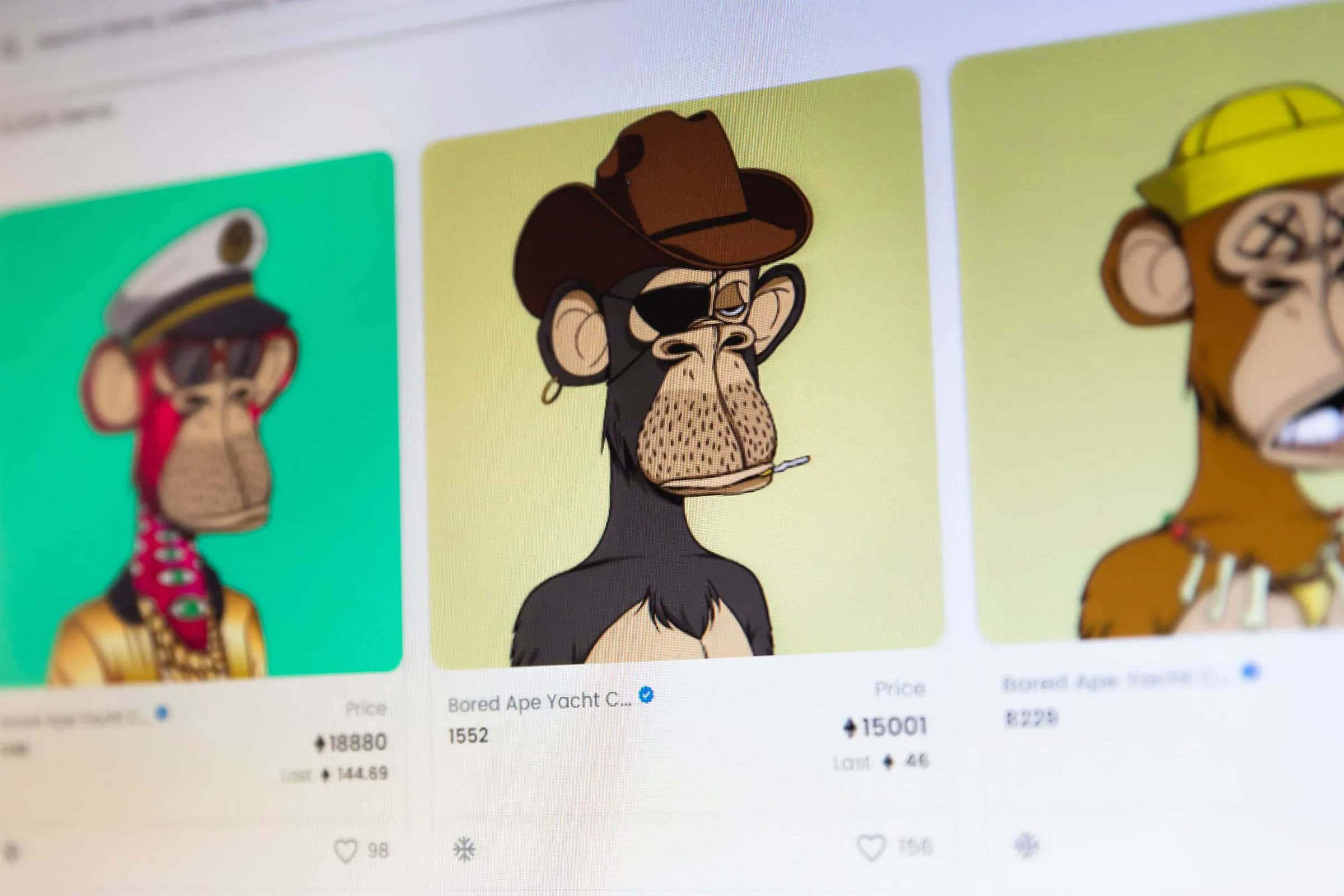
Owning certain NFTs (like Bored Ape Yacht Club) became a social signal—a way to show membership in an exclusive community. It’s similar to owning a luxury watch or a rare collectible in the physical world.
4. Speculation
Like any asset, many people buy NFTs hoping their value will increase so they can sell them later for a profit. This speculative demand drives prices.
5. Direct Artist Support
NFTs allow fans to support creators directly, with artists receiving a percentage of every secondary sale through embedded royalties—something impossible in the traditional art world.
Real-World Applications of NFTs
NFTs have evolved far beyond profile pictures. Here are the main categories:
1. Digital Art
The most famous use case. Artists can sell their work directly to collectors without galleries taking a cut. Platforms like SuperRare, Foundation, and KnownOrigin focus on high-end digital art. The artist retains royalties forever—every time the artwork resells, they automatically get a percentage.
2. Profile Picture (PFP) Collections
Projects like CryptoPunks, Bored Ape Yacht Club, and Pudgy Penguins made profile picture NFTs mainstream. Owning one became a status symbol and a ticket into an exclusive community. Many brands (like Adidas and Nike) have collaborated with these projects.
3. Gaming
NFTs are transforming gaming. Instead of buying in-game items that are locked to one game and controlled by the developer, players can truly own their items as NFTs. They can trade them freely on marketplaces or even use them across multiple games. Games like Axie Infinity, The Sandbox, and Gods Unchained pioneered this model.
4. Virtual Worlds (Metaverse)
Platforms like Decentraland and The Sandbox sell virtual land as NFTs. Owners can build on their land, host events, and monetize their creations. Brands like Sotheby’s, Atari, and even some governments have purchased virtual land.
5. Music and Media
Musicians can release albums or exclusive tracks as NFTs, giving fans ownership and sometimes perks like concert tickets or meet-and-greets. Kings of Leon, Grimes, and many independent artists have released music NFTs.
6. Ticketing and Events
NFT tickets can eliminate scalping and fraud. The issuer can set rules (like price caps on resale) and automatically pay royalties to artists on secondary sales. Attendees keep the ticket as a digital souvenir with verifiable authenticity.
7. Identity and Credentials
NFTs can represent diplomas, professional certifications, or memberships. They’re tamper-proof and instantly verifiable, unlike paper credentials that can be forged.
8. Physical Asset Tokenization
Luxury brands are experimenting with NFTs that represent ownership of physical items—a watch, a handbag, or even real estate. The NFT proves ownership and tracks the item’s history.
The Most Famous NFT Projects
- CryptoPunks: 10,000 unique 24×24 pixel art characters, one of the earliest NFT projects (2017). Considered the “OG” of NFTs, with some selling for millions.
- Bored Ape Yacht Club (BAYC): 10,000 cartoon apes that became a cultural phenomenon, owned by celebrities like Steph Curry, Eminem, and Jimmy Fallon.
- Art Blocks: Generative art where code creates unique outputs at the time of minting. Highly prized by serious art collectors.
- CryptoKitties: One of the first mainstream NFT games (2017) where users breed and trade digital cats. It famously clogged the Ethereum network at its peak.
- Axie Infinity: A play-to-earn game where players breed, raise, and battle fantasy creatures called Axies. Created an economic lifeline for some in developing countries.
- ENS Domains (Ethereum Name Service): NFTs representing domain names like “vitalik.eth” that make wallet addresses human-readable.
Common Criticisms and Risks
NFTs are controversial, and it’s important to understand the criticisms:
1. Environmental Concerns
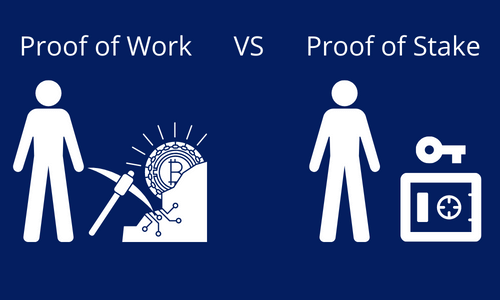
Early NFTs on Ethereum used Proof-of-Work mining, which consumed significant energy. However, Ethereum’s transition to Proof-of-Stake (The Merge) in 2022 reduced its energy consumption by over 99.9%. Many other NFT blockchains were always energy-efficient.
2. “Right-Click Save” Mentality
Skeptics ask: “Why buy an NFT when I can just right-click and save the image?” This misunderstands what an NFT represents. You’re buying provable ownership of the original token, not exclusive viewing access. A poster of the Mona Lisa isn’t the same as owning the actual painting.
3. Market Volatility and Speculation
The NFT market is extremely volatile. Many projects that sold for high prices during the 2021 boom are now worth fractions of their peak. Buying NFTs as investments is highly speculative and risky.
4. Scams and Rug Pulls
Because anyone can create an NFT project, scammers abound. “Rug pulls” happen when developers promote a project, collect money from mints, then abandon it and disappear with the funds. Always research projects thoroughly.
5. Copyright and Ownership Confusion
Buying an NFT usually doesn’t give you copyright ownership of the underlying art. Unless specified, you own the token, not the intellectual property. This has led to legal disputes and confusion.
6. Liquidity Risk
Unlike cryptocurrencies, NFTs are illiquid. You can’t instantly sell them at a fair market price. You need to find a buyer, which can take time or require selling at a steep discount.
How to Buy Your First NFT
If you’re interested in exploring NFTs, here’s a basic guide:
- Set up a wallet: Install MetaMask (for Ethereum-based NFTs) or Phantom (for Solana). Fund it with some cryptocurrency (ETH or SOL) to cover purchases and transaction fees.
- Choose a marketplace: OpenSea is the largest and supports multiple blockchains. Rarible, Blur (for traders), and Magic Eden (for Solana) are other options.
- Connect your wallet: Click “Connect Wallet” on the marketplace and approve the connection.
- Browse and research: Look at collections, check trading volume, verify the project has legitimate social media and community. Beware of copycat projects.
- Make a purchase: You can buy at a fixed price or place a bid in an auction. When you buy, you’ll pay the price plus gas fees.
- View your NFT: It will appear in your wallet and in your profile on the marketplace. Congratulations—you now own a piece of the blockchain!
The Future of NFTs
The NFT space is evolving rapidly. Beyond the speculative mania, the underlying technology has lasting potential:
- Dynamic NFTs: NFTs that can change based on conditions (like a sports card that updates with a player’s stats).
- Soulbound Tokens: Non-transferable NFTs representing identity, credentials, or achievements (like a diploma that can’t be sold).
- Fractional Ownership: Dividing expensive NFTs into smaller shares, allowing more people to invest in blue-chip art.
- Physical World Integration: More brands linking physical products to NFTs for authentication and loyalty programs.
- Gaming Dominance: As major game studios embrace blockchain, NFTs could become standard for in-game assets.
Conclusion
NFTs represent a fundamental shift in how we think about digital ownership. For the first time, we can truly own unique digital items, with provable scarcity and history recorded on an immutable blockchain. While the market has seen explosive hype and painful crashes, the technology continues to find practical applications in art, gaming, identity, and beyond.
Whether NFTs will revolutionize ownership or fade into a niche remains to be seen. But understanding them is essential for anyone trying to grasp where digital culture, finance, and the internet are heading.
Disclaimer: This article is for informational purposes only and does not constitute financial advice. The NFT market is highly speculative and volatile. Always do your own research before purchasing.