If you want to buy, sell, or trade cryptocurrencies, you need a cryptocurrency exchange. These platforms are the backbone of the crypto economy—the places where buyers and sellers meet, where prices are discovered, and where most people get their first exposure to digital assets.
But not all exchanges are created equal. Some are simple and beginner-friendly. Others offer complex trading tools for professionals. Some are centralized and regulated. Others are decentralized and permissionless. This guide explains what cryptocurrency exchanges are, how they work, and how to choose the right one for your needs.
What is a Cryptocurrency Exchange?
A cryptocurrency exchange is a digital marketplace where you can buy, sell, and trade cryptocurrencies. Think of it like a stock exchange (like the NYSE or NASDAQ), but for digital assets instead of company shares.
Exchanges serve several critical functions:
- Price Discovery: They bring together buyers and sellers to determine the market price of each cryptocurrency.
- Liquidity: They provide a place where you can quickly convert crypto to cash (or one crypto to another) without waiting for a buyer.
- Access: They’re the primary on-ramp from traditional currency (USD, EUR, etc.) into the crypto world.
- Custody (on centralized exchanges): They hold your cryptocurrencies for you, simplifying security for beginners.

Types of Cryptocurrency Exchanges
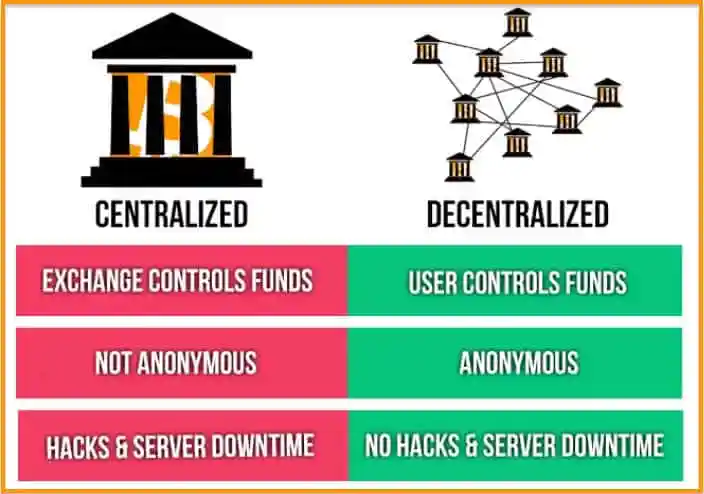
There are two main categories of exchanges: centralized and decentralized. Each has its own advantages and trade-offs.
Centralized Exchanges (CEX)
Centralized exchanges are the most common type, especially for beginners. They’re operated by companies that act as intermediaries between buyers and sellers. Think of Coinbase, Bybit, Binance, Kraken, and OKX.
How they work:
- You create an account and complete identity verification (KYC – Know Your Customer).
- You deposit funds (traditional currency or crypto) into an account on the exchange.
- The exchange holds your funds in its own wallets (custodial).
- You place orders to buy or sell, and the exchange matches you with other users.
- When you want to withdraw, you request the exchange to send crypto to your personal wallet.
Advantages of CEX:
- User-Friendly: Interfaces are designed for ease of use, making them ideal for beginners.
- High Liquidity: Large user bases mean you can usually buy or sell instantly at fair prices.
- Customer Support: If something goes wrong, you can contact the company for help.
- Fiat On-Ramps: Easy ways to deposit traditional currency via bank transfer, credit card, etc.
- Advanced Features: Many offer margin trading, futures, staking, and other products.
Disadvantages of CEX:
- Custodial Risk: You don’t control your private keys (“not your keys, not your coins”). If the exchange is hacked or goes bankrupt, you could lose your funds.
- Privacy: You must provide personal information (KYC).
- Censorship: The exchange can freeze your account or block transactions if it chooses.
- Single Point of Failure: The exchange’s servers could go down, or the company could face regulatory issues.
Examples: Coinbase, Binance, Bybit, Kraken, OKX, Gate.io, Bitget, MEXC.
Decentralized Exchanges (DEX)
Decentralized exchanges operate without a central company. They’re peer-to-peer marketplaces built on smart contracts, usually on blockchains like Ethereum or Solana.
How they work:
- You connect your self-custodial wallet (like MetaMask or Phantom) to the DEX.
- You don’t deposit funds to the exchange—you trade directly from your wallet.
- Smart contracts automatically match buyers and sellers, often using liquidity pools (automated market makers) rather than order books.
- Trades settle directly on the blockchain.
Advantages of DEX:
- Non-Custodial: You always control your private keys. Funds never leave your wallet until a trade executes.
- Privacy: No KYC required. You only need a wallet address.
- Censorship-Resistant: No company can freeze your account or block your trades.
- Global Access: Anyone with an internet connection can use them.
Disadvantages of DEX:
- Complexity: Interfaces can be intimidating for beginners.
- No Fiat On-Ramps: You can’t deposit dollars directly—you need to already have crypto.
- Lower Liquidity: For less popular tokens, it may be hard to trade without significant price slippage.
- Smart Contract Risk: Bugs in the DEX’s code could lead to loss of funds.
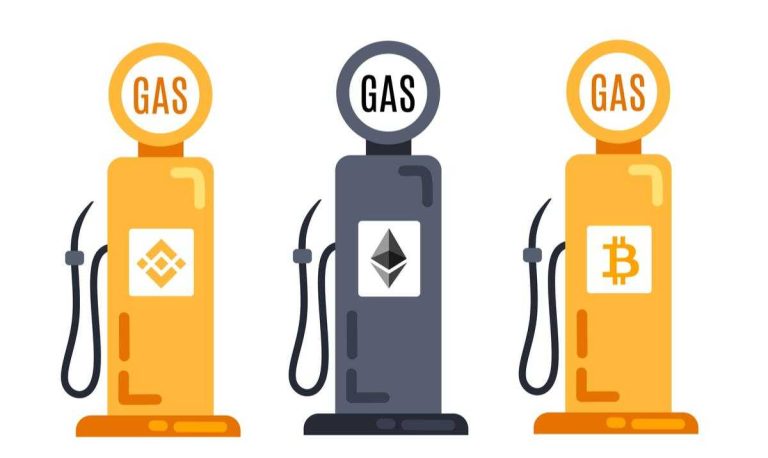
- Gas Fees: On Ethereum-based DEXs, you pay network fees (gas) for every trade.
Examples: Uniswap (Ethereum), Jupiter (Solana), PancakeSwap (BNB Chain), Curve (Stablecoin DEX).
How Exchanges Make Money
Exchanges are businesses. They generate revenue through various means:
- Trading Fees: The most common model. You pay a small percentage (often 0.1% to 0.5%) on each trade. Makers (those providing liquidity) usually pay less than takers (those taking liquidity).
- Withdrawal Fees: Fees to move crypto off the exchange.
- Spread: On beginner-friendly interfaces like Coinbase’s main app, you pay a spread (a markup on the market price).
- Listing Fees: Projects may pay to have their tokens listed on the exchange.
- Margin Trading and Lending: Interest on funds borrowed by traders.
- Staking Services: Taking a cut of staking rewards.
- Premium Services: Advanced tools, API access, or institutional services.
Key Features to Look for in an Exchange
When choosing an exchange, consider these factors:
1. Security
This should be your top priority. Look for:
- Track record: Has the exchange ever been hacked? How did they handle it?
- Cold storage: Most funds should be kept offline.
- 2FA and security features: Strong authentication options.
- Proof of Reserves: Can they prove they have the assets they claim?
- Insurance: Some exchanges have insurance funds for user protection.
2. Fees
Fee structures vary widely. Compare:
- Spot trading fees: Percentage per trade.
- Withdrawal fees: Fixed fees for moving crypto.
- Deposit methods: Bank transfers may be free, credit cards have fees.
- Hidden costs: Spread on simple buy/sell interfaces.
3. Available Assets
Does the exchange list the cryptocurrencies you want to trade? Some exchanges (like Coinbase) are selective, while others (like Gate.io) list thousands of tokens.
4. Liquidity
High liquidity means you can trade without large price slippage. Major exchanges (Binance, Coinbase, Bybit, OKX) have the deepest liquidity.
5. User Experience
Is the platform easy to navigate? Is the mobile app well-designed? Beginners may prefer simpler interfaces, while traders want advanced charting tools.
6. Geographic Restrictions
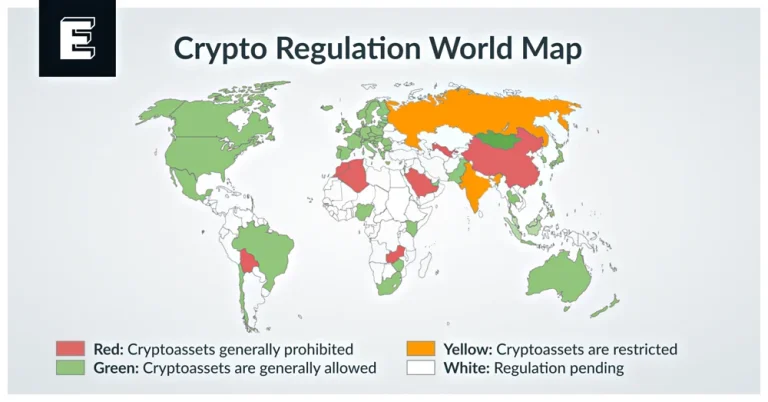
Many exchanges restrict users from certain countries (especially the US). Always check if the exchange is available in your region.
7. Customer Support
If something goes wrong, can you get help? Look for exchanges with responsive support channels.
8. Regulatory Compliance
Regulated exchanges (like Coinbase in the US) follow strict rules but may require more personal information. Unregulated exchanges offer more freedom but higher risk.
9. Additional Features
Consider if you need:
- Staking and earning products
- Margin or futures trading
- Copy trading (like Bitget)
- Launchpad for new tokens
- Built-in wallet or DeFi access
Popular Exchanges: A Quick Overview
| Exchange | Type | Best For | Key Feature |
|---|---|---|---|
| Coinbase | CEX | Beginners, US users | Regulated, easy to use |
| Binance | CEX | Volume traders, global users | Largest liquidity, many features |
| Bybit | CEX | Derivatives traders | Perpetual futures, high performance |
| OKX | CEX | All-round traders | DeFi wallet integration |
| Kraken | CEX | Security-focused users | Strong security, never hacked |
| Gate.io | CEX | Altcoin hunters | 2,500+ assets listed |
| Bitget | CEX | Copy trading fans | Social and copy trading |
| MEXC | CEX | Low-fee traders | 0% maker fees, many new listings |
| Uniswap | DEX | DeFi users, Ethereum | Largest DEX, non-custodial |
| Jupiter | DEX | Solana users | Best DEX aggregator on Solana |
How to Choose the Right Exchange
Here’s a simple decision framework:
For absolute beginners:
Start with a regulated, user-friendly centralized exchange like Coinbase. It’s the safest and easiest way to buy your first crypto.
For US-based users:
Your options are more limited. Coinbase and Kraken are solid choices. Binance.US is available but with fewer features than the global version.
For active traders:
Look at Binance, Bybit, or OKX for deep liquidity, low fees, and advanced trading tools.
For altcoin enthusiasts:
Gate.io and MEXC list the widest variety of tokens, including many smaller projects.
For copy trading:
Bitget is the leader in this space.
For DeFi users and maximum control:
Use decentralized exchanges like Uniswap (Ethereum) or Jupiter (Solana) with a self-custodial wallet.
Security Best Practices for Exchange Users
No matter which exchange you use, follow these rules:
- Enable 2FA: Use an authenticator app, not SMS.
- Use strong, unique passwords: Store them in a password manager.
- Whitelist withdrawal addresses: Only allow withdrawals to addresses you’ve approved.
- Don’t keep funds on exchanges: For long-term holdings, move them to a self-custodial wallet (especially a hardware wallet).
- Beware of phishing: Always check URLs before logging in.
- Start small: Test withdrawals and deposits with small amounts first.
- Research before using: Check the exchange’s reputation, history, and regulatory status.
The Future of Exchanges
The exchange landscape continues to evolve:
- Regulation: Expect more oversight, especially for centralized exchanges, which may increase user protection but reduce privacy.
- Hybrid Models: Some exchanges are exploring ways to combine the liquidity of CEXs with the self-custody of DEXs.
- Institutional Adoption: More regulated, institutional-grade platforms are emerging.
- DeFi Growth: DEXs are gaining market share as user experience improves.
- Cross-Chain Trading: Exchanges that allow seamless trading across different blockchains will become more important.
Conclusion
Cryptocurrency exchanges are the gateways to the digital asset world. Whether you choose a centralized exchange for its ease of use and liquidity or a decentralized exchange for its security and privacy, understanding how these platforms work is essential for anyone entering crypto.
Remember the golden rule: exchanges are for trading, not for long-term storage. Use them to buy and sell, but for assets you want to hold, transfer them to a wallet where you control the private keys. Not your keys, not your coins.
Disclaimer: This article is for informational purposes only and does not constitute financial advice. Cryptocurrency exchanges involve risk. Always do your own research.