Imagine a company with no CEO, no board of directors, and no employees—at least not in the traditional sense. Decisions are made collectively by thousands of people around the world, rules are enforced by code, and the treasury is visible to anyone. This isn’t a futuristic fantasy. It’s a DAO—a Decentralized Autonomous Organization.
DAOs represent a new way of organizing human coordination. They’re internet-native communities with shared goals, shared treasuries, and shared decision-making. This guide explains what DAOs are, how they work, and why they’re one of the most important innovations to come out of the blockchain space.
The Problem: Traditional Organizations Have Gatekeepers
Traditional organizations—companies, nonprofits, clubs—share a common structure: they have leaders. A CEO makes executive decisions. A board of directors sets strategy. Managers control budgets and hiring. If you want to participate, you need permission, and you have little say in how things are run.
This centralized structure has drawbacks:
- Gatekeeping: You can’t join without approval.
- Lack of Transparency: Decisions happen behind closed doors.
- Inefficiency: Bureaucracy slows things down.
- Principal-Agent Problem: Leaders may act in their own interest, not the organization’s.
DAOs offer an alternative: an organization run by rules, not rulers.

What is a DAO?
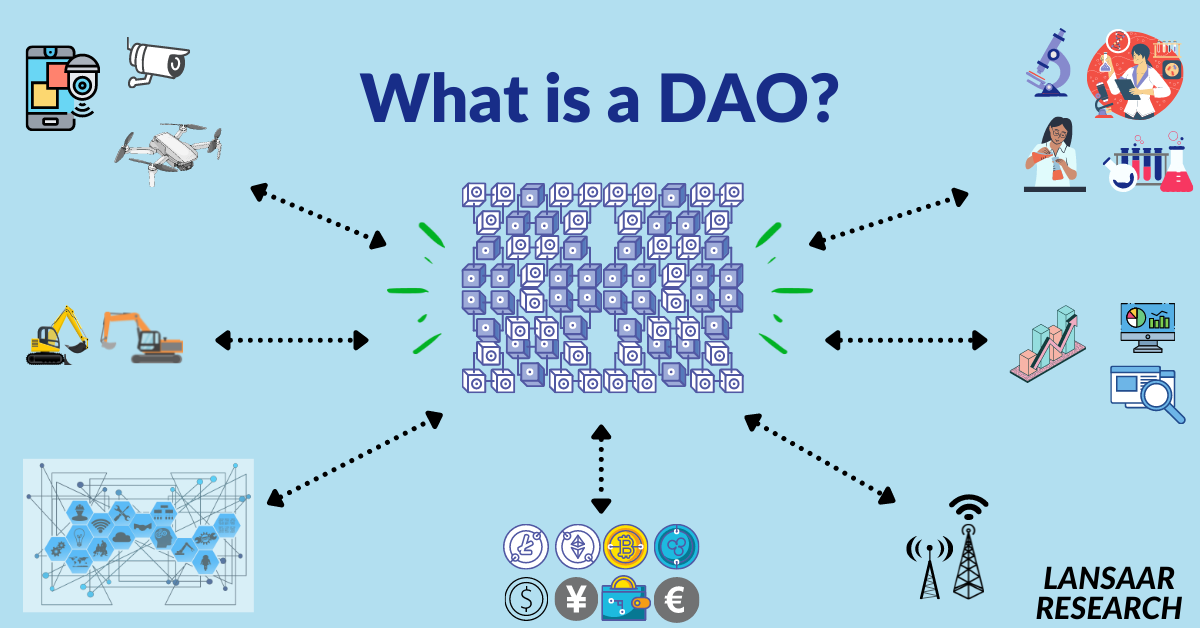
A DAO is an organization represented by rules encoded as a computer program that is transparent, controlled by organization members, and not influenced by a central government. In simpler terms: it’s a group of people with a shared mission who coordinate through smart contracts on a blockchain.
The name breaks down into three parts:
- Decentralized: No single person or entity has control. Decisions are made collectively.
- Autonomous: Rules are enforced by code, not people. Once deployed, the organization runs itself according to its programming.
- Organization: A group of people working toward a common goal, with shared resources.
DAOs are sometimes described as “internet communities with a bank account.” That bank account is a treasury of cryptocurrency, controlled by the collective decisions of members.
How Does a DAO Work?
DAOs operate through smart contracts on a blockchain (usually Ethereum). Here’s the typical structure:
1. Smart Contracts: The Rules
The DAO’s rules are written in smart contracts. These contracts define things like:
- How membership works
- How proposals are made
- How voting works
- How funds are distributed
Once deployed, these rules are immutable and transparent. Anyone can read them and verify how the DAO operates.
2. Tokens: Membership and Voting Power
Most DAOs use tokens to manage membership and voting. There are two main models:
- Token-Based Membership: Anyone who holds the DAO’s governance token can vote. More tokens = more voting power. This is common in DeFi protocols (e.g., UNI holders govern Uniswap).
- Share-Based Membership: Membership requires approval (like buying a share in a cooperative). New members must be voted in by existing members. This is common for social clubs or grant-making DAOs.
3. Proposals: Ideas for Action
Anyone with voting power can create a proposal. A proposal might suggest:
- Spending treasury funds on a project
- Changing a protocol parameter (like a fee)
- Adding a new feature
- Partnering with another organization
Proposals are submitted on-chain and often discussed in forums or Discord first.
4. Voting: Collective Decision-Making
Token holders vote on proposals during a specified period. Voting is typically done directly from a wallet. Options might be “For,” “Against,” or “Abstain.” The voting rules (like quorum requirements and approval thresholds) are defined in the smart contract.
5. Execution: Code Enforces the Outcome
If a proposal passes, the smart contract automatically executes the decision. If it’s a treasury spend, funds are transferred. If it’s a parameter change, the contract updates. No human intervention is needed—code enforces the will of the voters.
Types of DAOs
DAOs come in many forms, serving different purposes.
1. Protocol DAOs
These govern decentralized protocols, usually DeFi applications. Token holders vote on changes to the protocol, fee structures, and treasury management.
Examples: Uniswap (UNI), Compound (COMP), MakerDAO (MKR).
2. Grant DAOs
These distribute funds to support projects that benefit the ecosystem. Community members vote on which projects receive grants.
Examples: Gitcoin, Aave Grants DAO, Uniswap Grants Program.
3. Collector DAOs
These pool funds to purchase and manage valuable assets, like NFTs or digital art. Members collectively own the collection.
Examples: PleasrDAO, FlamingoDAO, Nouns DAO.
4. Social DAOs
These are communities built around shared interests, with membership often requiring an application or purchase of a membership NFT. They may organize events, fund projects, or just provide a private space for members.
Examples: Friends With Benefits (FWB), Bored Ape Yacht Club (as a social layer).
5. Investment DAOs
These pool capital to make collective investments in startups, protocols, or other assets. Members vote on where to deploy funds.
Examples: MetaCartel Ventures, The LAO.
6. Service DAOs
These aggregate talent and provide services (development, design, marketing) to other projects, with members contributing work and being rewarded through governance.
Examples: RaidGuild, DxDAO.
Real-World Example: MakerDAO
MakerDAO is one of the oldest and most successful DAOs. It governs the DAI stablecoin—a decentralized cryptocurrency pegged to the US dollar.
How it works:
- MKR token holders govern the protocol.
- They vote on risk parameters like collateral types and stability fees.
- The treasury holds fees generated by the protocol.
- Voting occurs on-chain, and decisions are executed automatically.
MakerDAO has managed billions in value without a CEO or traditional management structure.
Real-World Example: Uniswap DAO
Uniswap, the largest DEX, is governed by UNI token holders. They vote on:
- Fee switches (whether to turn on fees for certain pools)
- Treasury grants
- Protocol upgrades
The Uniswap treasury holds billions in assets, all controlled by token holder votes.
Advantages of DAOs
1. Decentralization and Transparency
No single point of failure or control. All rules and transactions are visible on the blockchain.
2. Global Participation
Anyone with an internet connection can join and contribute, regardless of location or background.
3. Lower Barriers to Entry
You don’t need to be a wealthy investor or have connections. You can earn voting power by contributing or buying tokens.
4. Alignment of Incentives
Token holders are also stakeholders. If the DAO succeeds, the value of their tokens increases, aligning individual and collective interests.
5. Automation and Efficiency
Smart contracts automate execution, reducing bureaucracy and administrative costs.
6. Composability
DAOs can interact with other DAOs and protocols, creating complex, interconnected systems.
Challenges and Risks
1. Regulatory Uncertainty
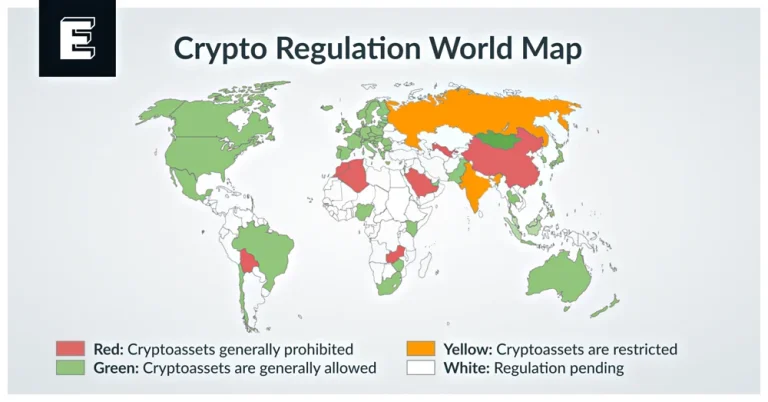
DAOs exist in a legal gray area. Are they partnerships? Unincorporated associations? Something else? Regulators are still figuring it out, and DAO participants could face legal liability.
2. Voter Apathy
In many DAOs, few token holders actually vote. Low participation can lead to decisions being made by a small, unrepresentative group.
3. Plutocracy
Token-based voting concentrates power in the hands of large holders. Whales can dominate decisions, potentially against the interests of smaller members.
4. Smart Contract Risk
Bugs in the DAO’s code could lead to loss of funds or exploitation. The original “The DAO” in 2016 was hacked due to a code vulnerability.
5. Coordination Challenges
Decentralized decision-making can be slow and messy. Reaching consensus among thousands of people is hard.
6. Sybil Attacks
Someone could create many identities to gain voting power. DAOs use various mechanisms (like token holding or reputation) to mitigate this.
How to Start or Join a DAO
Joining a DAO:
- Find a DAO aligned with your interests (use platforms like DeepDAO or DAOlist).
- Join their Discord or forum to understand the community.
- Acquire governance tokens (buy on exchanges or earn through contributions).
- Start participating in discussions and voting.
Starting a DAO:
- Define the purpose and mission.
- Choose a blockchain (Ethereum, Solana, etc.).
- Design the governance structure (token model, voting rules).
- Deploy smart contracts (using tools like Aragon, Syndicate, or Colony).
- Seed the treasury and distribute initial tokens.
- Build community and start governing.
Tools for DAOs
A growing ecosystem of tools supports DAO operations:
- Governance Platforms: Snapshot (off-chain voting), Tally (on-chain), Boardroom.
- Treasury Management: Multisig wallets (Gnosis Safe), Parcel, Coinshift.
- Communication: Discord, Discourse, Commonwealth.
- DAO Creation: Aragon, Syndicate, Colony, Juicebox.
- Analytics: DeepDAO, Dune Analytics.
The Future of DAOs
DAOs are still in their infancy. As the space evolves, we can expect:
- Legal Recognition: Jurisdictions like Wyoming and Switzerland are creating legal structures for DAOs.
- Improved Governance: New models like quadratic voting, conviction voting, and delegation to address plutocracy and apathy.
- Hybrid Organizations: DAOs working alongside traditional companies.
- Mainstream Adoption: More people participating in DAOs as user experience improves.
- DAO-to-DAO Collaboration: Networks of DAOs coordinating with each other.
Conclusion
DAOs represent a fundamental shift in how humans organize. By replacing hierarchy with code and collective decision-making, they offer a more transparent, global, and participatory model for coordination. From governing billions in DeFi protocols to funding open-source development and collecting digital art, DAOs are proving that organizations can run without rulers.
They’re not without challenges—regulatory uncertainty, governance flaws, and coordination difficulties remain. But as tools improve and experiments continue, DAOs may become as common as LLCs are today. Understanding them is essential for anyone interested in the future of work, finance, and online communities.
Disclaimer: This article is for informational purposes only and does not constitute legal or financial advice. DAOs involve risk. Always do your own research.