Ethereum and Bitcoin are revolutionary, but they have a problem: they don’t scale well. When too many people use them, transactions become slow and expensive. During peak demand, sending a transaction on Ethereum could cost $50 or more. This isn’t just inconvenient—it makes many applications impractical.
Enter Layer 2 solutions. These are technologies built on top of base blockchains (Layer 1) to increase transaction speed, reduce costs, and enable mass adoption. This guide explains what Layer 2 is, how it works, and why it’s essential for the future of cryptocurrency.
The Scalability Problem: Why Layer 1 Isn’t Enough
Layer 1 blockchains like Bitcoin and Ethereum are the foundation. They provide security and decentralization, but they have inherent limitations:
- Bitcoin: Processes about 7 transactions per second (TPS).
- Ethereum: Processes about 15-30 TPS.
Compare that to Visa, which handles thousands of TPS and can peak at 65,000. For crypto to achieve mainstream adoption, it needs to handle massive transaction volumes without becoming slow or expensive.
You could try to scale the base layer itself (making Layer 1 faster), but that often means compromising on decentralization or security. This is the blockchain trilemma: the challenge of achieving scalability, decentralization, and security simultaneously.
Layer 2 solutions offer a way around the trilemma. They handle transactions off the main chain, then settle the final results back to Layer 1, inheriting its security while achieving much higher throughput.

What is Layer 2?
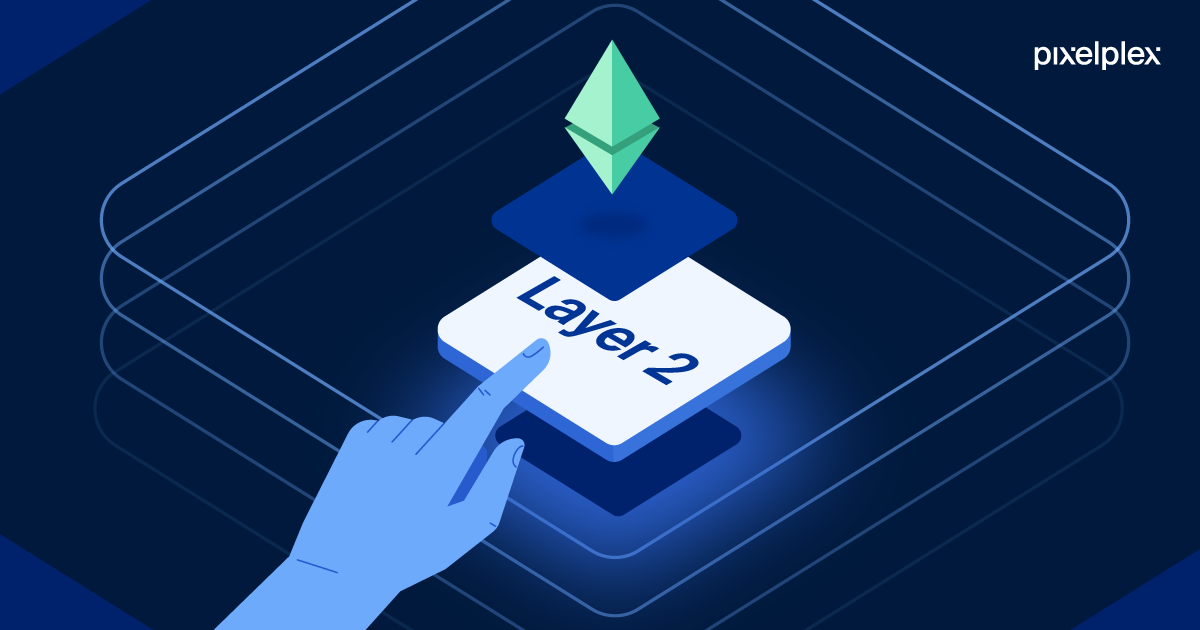
A Layer 2 (L2) is a secondary protocol built on top of an existing blockchain (Layer 1). Its purpose is to solve the scalability problems of the main chain.
Think of it like a busy restaurant. The main kitchen (Layer 1) can only cook so many meals at once. To serve more customers, you could add an outdoor grill (Layer 2) that handles simpler orders, then sends the finished meals back to the main kitchen for plating and serving. Customers get their food faster, and the main kitchen isn’t overwhelmed.
In blockchain terms:
- Layer 1 handles security, consensus, and final settlement.
- Layer 2 handles transaction execution, processing many transactions quickly and cheaply.
- Periodically, L2 batches transactions and submits proofs back to L1.
Users enjoy fast, cheap transactions, while the security of the main chain protects their funds.
Types of Layer 2 Solutions
Several approaches to Layer 2 scaling exist, each with different trade-offs.
1. Rollups (The Most Promising)
Rollups are currently the leading L2 solution, especially for Ethereum. They “roll up” hundreds of transactions into a single batch, compress the data, and submit it to Layer 1. This dramatically reduces the load on the main chain.
There are two main types of rollups:
Optimistic Rollups
Optimistic rollups assume transactions are valid by default and only run computations if challenged. If someone suspects a fraudulent transaction, they can submit a “fraud proof” during a challenge period (usually 7 days). If the fraud is proven, the dishonest party is penalized, and the correct state is restored.
Pros: Compatible with Ethereum’s existing tools (EVM), easier to build.
Cons: Long withdrawal times (due to challenge period), relies on watchful validators.
Examples: Arbitrum, Optimism, Base (Coinbase’s L2).
ZK-Rollups (Zero-Knowledge Rollups)
ZK-rollups use cryptographic proofs (validity proofs) to verify that all transactions in the batch are correct. Instead of assuming transactions are valid, they mathematically prove it. Once the proof is verified on L1, the batch is finalized instantly.
Pros: Faster finality, no challenge period, more secure mathematically.
Cons: More complex to build, less compatible with Ethereum’s existing tools (though improving rapidly).
Examples: zkSync, StarkNet, Polygon zkEVM, Scroll.
2. State Channels
State channels allow participants to transact off-chain while keeping the overall state anchored to the main chain. Think of it like a tab at a bar: you open a tab (open the channel), have several drinks (transact off-chain), and settle the final bill at the end (close the channel on-chain).
Pros: Extremely fast and cheap, unlimited transactions.
Cons: Requires participants to be online, not suitable for open, general-purpose applications.
Examples: Lightning Network (Bitcoin), Raiden Network (Ethereum).
3. Sidechains
Sidechains are independent blockchains that run parallel to the main chain. They have their own consensus mechanisms and security models but are connected to L1 via a two-way bridge that allows assets to move between them.
Technically, sidechains are often considered separate chains rather than pure L2s because they don’t inherit L1’s full security. But they serve a similar scaling purpose.
Pros: High throughput, customizable.
Cons: Separate security model (less secure than L1), bridge risks.
Examples: Polygon PoS, Gnosis Chain.
4. Plasma
Plasma was an early L2 design where child chains report back to the main chain. It worked for simple payments but struggled with more complex applications. It’s largely been superseded by rollups.
5. Validium
Similar to ZK-rollups, but data is kept off-chain (not published to L1), enabling even higher throughput. The trade-off is reduced data availability, which can impact security.
Examples: StarkEx (used by dYdX, Immutable X).
Why Layer 2 Matters
1. Lower Fees
L2s reduce transaction costs by orders of magnitude. On Ethereum L2s, fees are often pennies or fractions of a penny, compared to dollars on L1.
2. Higher Throughput
Rollups can process thousands of transactions per second, making applications like gaming, micropayments, and social media feasible.
3. Better User Experience
Faster confirmations and lower costs make using dApps feel like using normal apps.
4. Maintained Security
Unlike standalone high-speed chains, L2s inherit security from Layer 1. Your funds are ultimately protected by Ethereum or Bitcoin.
5. Ecosystem Growth
L2s enable new use cases that weren’t possible on congested L1s, expanding the entire crypto ecosystem.
Layer 2 Comparison Table
| Solution | Type | Speed | Security | Examples |
|---|---|---|---|---|
| Arbitrum | Optimistic Rollup | High | Inherits Ethereum security | General dApps, DeFi |
| Optimism | Optimistic Rollup | High | Inherits Ethereum security | General dApps, DeFi |
| zkSync | ZK-Rollup | Very High | Mathematically proven | Payments, DeFi, NFTs |
| StarkNet | ZK-Rollup | Very High | Mathematically proven | General dApps, DeFi |
| Polygon PoS | Sidechain | High | Independent (less than Ethereum) | General dApps, gaming |
| Lightning Network | State Channel | Instant | Inherits Bitcoin security | Bitcoin payments |
| Base | Optimistic Rollup | High | Inherits Ethereum security | Coinbase-backed, general dApps |
Layer 2 and Ethereum’s Roadmap
Ethereum’s future is explicitly rollup-centric. The roadmap assumes that most activity will move to L2s, while Layer 1 focuses on security, data availability, and settlement. This is sometimes called “Ethereum as a settlement layer” or “the world computer’s backend.”
Key upgrades to support L2s:
- EIP-4844 (Proto-Danksharding): Introduces “blob-carrying transactions” that give L2s cheaper space to post data, dramatically reducing L2 fees.
- Data Sharding: Future upgrades will further increase data availability for L2s.
The goal is for Ethereum L1 to be a secure, decentralized backbone, with L2s providing the scalability for mass adoption.
Using Layer 2: A Practical Guide
For users, interacting with L2s is increasingly seamless:
- Get a wallet that supports L2s: MetaMask, Rabby, and most EVM wallets work.
- Bridge funds: Use a bridge to move assets from L1 to L2 (e.g., Arbitrum bridge, official portals, or aggregators like Orbiter).
- Use dApps on L2: Many dApps (Uniswap, Aave, etc.) are deployed on multiple L2s. Select the L2 network in your wallet and transact with low fees.
- Bridge back when needed: To return to L1, use the bridge again (note: withdrawals from optimistic rollups take ~7 days due to fraud proof windows).
Popular L2s to explore:
- Arbitrum One: Largest L2 by TVL, many DeFi protocols.
- Optimism: Another major optimistic rollup with growing ecosystem.
- Base: Coinbase’s L2, integrated with Coinbase exchange.
- zkSync Era: Leading ZK-rollup with native account abstraction.
- Polygon zkEVM: Polygon’s ZK-rollup with EVM compatibility.
Challenges and Risks
1. Fragmentation
Liquidity and users are spread across multiple L2s. Moving between them requires bridges, which adds complexity and risk.
2. Bridge Security
Bridges between L1 and L2 are frequent targets for hacks. If a bridge is compromised, funds can be stolen.
3. Withdrawal Delays (Optimistic Rollups)
The 7-day challenge period for optimistic rollups can be inconvenient, though fast bridges (using liquidity providers) can bypass it for a fee.
4. User Experience
Managing multiple networks, bridging, and understanding which L2 an app is on can confuse new users.
5. Centralization Risks
Some L2s have centralized sequencers (the entities ordering transactions), though they’re expected to decentralize over time.
The Future of Layer 2
Layer 2 technology is evolving rapidly. Expect to see:
- Interoperability: Protocols that allow seamless movement between L2s.
- L3s (Layer 3): Application-specific layers built on top of L2s for even greater scalability and customization.
- ZK-EVMs: ZK-rollups fully compatible with Ethereum’s developer experience will become the norm.
- Mainstream Adoption: Most users will interact with L2s without even knowing it, as apps abstract away the complexity.
Conclusion
Layer 2 solutions are not just a temporary fix—they’re the future of blockchain scalability. By moving execution off the main chain while inheriting its security, L2s enable fast, cheap transactions without sacrificing decentralization.
For Ethereum, the rollup-centric roadmap is clear. For Bitcoin, the Lightning Network brings fast payments. As these technologies mature and user experience improves, L2s will be how most people interact with blockchain—making crypto usable for the world.
Disclaimer: This article is for informational purposes only and does not constitute financial advice. Layer 2 solutions and bridges involve risk. Always do your own research.