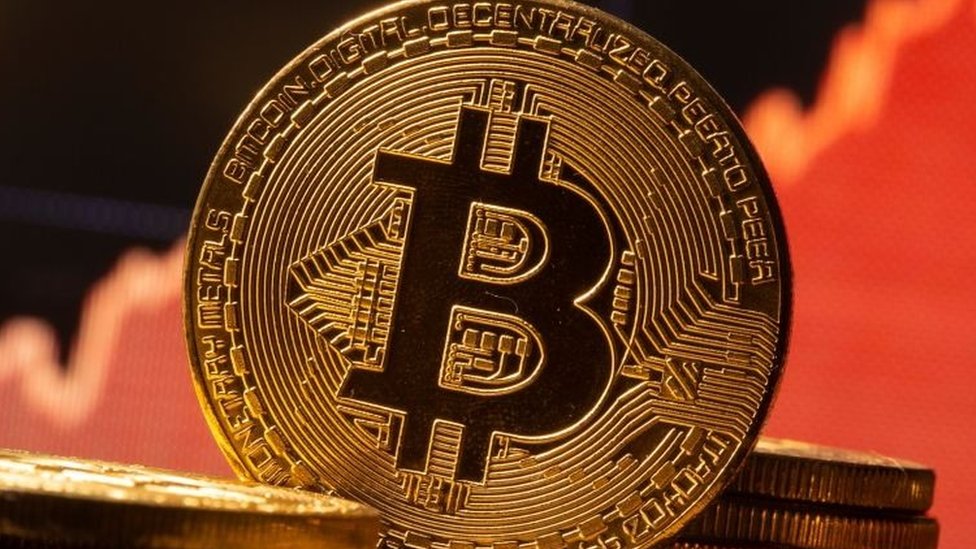
In 2008, a mysterious figure or group named Satoshi Nakamoto published a white paper titled “Bitcoin: A Peer-to-Peer Electronic Cash System.” This document outlined a radical new idea: a form of money that doesn’t rely on banks or governments. Fast forward to today, and Bitcoin (often capitalized when referring to the network, lowercase “bitcoin” for the currency unit, ticker: BTC) has become a global phenomenon. But what exactly is it? This guide breaks down the world’s first cryptocurrency in simple terms.
Understanding the Problem Bitcoin Solves
For most of history, if you wanted to send money to someone, you needed a middleman—a bank, a credit card company, or a service like PayPal. These “trusted third parties” verify that you have the money, deduct it from your account, and add it to the recipient’s. This system works, but it has flaws:
- Centralized Control: Banks can freeze your account or block transactions.
- High Fees: Intermediaries take a cut, especially for international transfers.
- Slow Processing: International bank transfers can take several days.
- Privacy: Banks have full access to your financial history.
- You Initiate a Payment: You want to send 1 BTC to your friend Alice. You create a message saying, “Send 1 BTC from my address to Alice’s address,” and sign it with your private key (more on this later).
- Broadcasting: This transaction is broadcast to the Bitcoin network, which is a vast network of computers (called nodes) all over the world.
- Verification: The nodes collect pending transactions and check if they are valid. Do you actually have 1 BTC to spend? Is your digital signature correct?
- Forming a Block: Valid transactions are grouped together into a “block.”
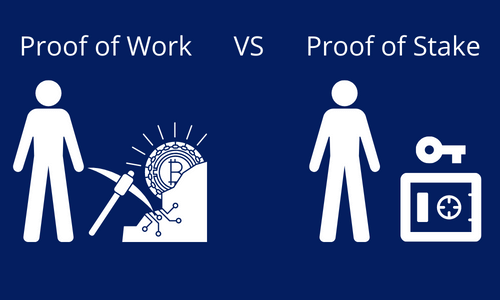
- Mining (Proof-of-Work): This is the crucial step. Special nodes called miners compete to solve an incredibly complex mathematical puzzle based on the data in the block. This process requires massive amounts of computational power. The first miner to solve the puzzle gets to add the new block to the blockchain.
- Confirmation: Once the block is added, the transaction is confirmed. As more blocks are added on top of it, the transaction becomes more irreversible and secure. The miner who solved the puzzle is rewarded with newly created bitcoins and transaction fees. This is how new bitcoins enter circulation.
- Securing the Network: Miners provide the “work” in “Proof-of-Work,” making it extremely expensive to attack the network.
- Issuing New Coins: Miners are rewarded with new bitcoins, similar to how a central bank prints money, but in a predictable and decentralized way.
- “Bitcoin is anonymous.” Actually, it’s pseudonymous. All transactions are public on the blockchain, linked to addresses, not real names. However, if your identity becomes linked to an address, anyone can see your entire transaction history.
- “Bitcoin is used only for illegal things.” While early adopters included users of the Silk Road darknet market, today, the vast majority of Bitcoin transactions are legitimate. Public blockchains are actually terrible for crime because they create a permanent record. Cash is still the king of anonymity.
- “Bitcoin is a bubble.” Bitcoin has experienced multiple boom-and-bust cycles (sometimes called “crypto winters”). However, each cycle has seen the price reach higher lows and higher highs over the long term, suggesting growing adoption as an asset class, not just speculative hype.
- “Bitcoin is bad for the environment.” Bitcoin mining does consume a lot of electricity. However, a growing percentage of that energy comes from renewable sources (like hydro, solar, or stranded natural gas). Furthermore, miners are economically incentivized to find the cheapest energy, which is often renewable.
- Financial Sovereignty: For people in countries with hyperinflation or unstable governments (like Venezuela or Zimbabwe), Bitcoin offers a way to store value that cannot be confiscated or inflated away by the state.
- Programmable Money: Bitcoin’s underlying technology opens the door for innovations like smart contracts and decentralized finance (DeFi) on other networks, but it remains the bedrock—the most secure and decentralized cryptocurrency.
- A Store of Value: Due to its fixed supply, many investors view Bitcoin as a hedge against inflation, similar to gold, hence the nickname “Digital Gold.”
Bitcoin was designed to solve these problems by removing the middleman entirely. It allows two people anywhere in the world to send money directly to each other, without a bank, without high fees, and without waiting for days. This concept is called peer-to-peer electronic cash.

How Does Bitcoin Work? The Basics of Blockchain
To understand Bitcoin, you must first understand its underlying technology: the blockchain. Imagine a shared public ledger, like a Google Doc, that everyone in the world can see. This document records every single Bitcoin transaction ever made.
Here’s how a transaction works, step-by-step:
Because the ledger is public and distributed across thousands of computers, no single person, company, or government can control it or cheat the system. To alter a past transaction, a hacker would need to control more than 51% of the network’s computing power—a feat that is practically impossible for the Bitcoin network.
Key Concepts Explained Simply
1. What is a Bitcoin Wallet?
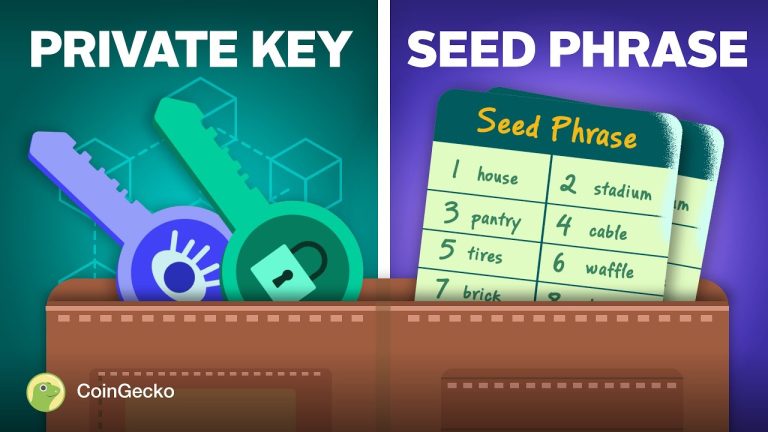
You don’t store bitcoins “in” a wallet like coins in a physical wallet. Instead, your Bitcoin wallet stores your private keys. Think of your public key (or address) as your email address—you give it to people so they can send you bitcoin. Your private key is like your email password—you must keep it secret. If you lose your private key, you lose your bitcoin forever. If someone steals it, they can send your bitcoin anywhere.
2. What is a Private Key and Seed Phrase?
When you create a wallet, you are given a seed phrase—usually 12 or 24 random words (e.g., “sunny orange dog…”). This phrase is a human-readable form of your master private key. Write this phrase down on paper and store it in a safe place. Never take a photo of it or store it on your computer or in the cloud. Anyone with this phrase controls your bitcoin.
3. What is Bitcoin Mining?
Mining is the process of using specialized computers (ASICs) to solve complex math problems. It serves two purposes:
4. What is the Bitcoin Halving?
The Bitcoin protocol has a built-in rule: the reward miners receive is cut in half approximately every four years. This is called the “halving.” When Bitcoin launched, the reward was 50 BTC. It has since been halved multiple times and is now 3.125 BTC (as of 2024). This mechanism makes Bitcoin disinflationary. Unlike fiat money (like the US Dollar), which can be printed infinitely, there will only ever be 21 million bitcoins. The halving ensures that the last bitcoin will be mined around the year 2140. This scarcity is a major reason why Bitcoin is often called “Digital Gold.”
Who Created Bitcoin and Why?
The creator, Satoshi Nakamoto, disappeared from the public eye in 2011, leaving behind the code and the community. Their identity remains one of the greatest mysteries in tech. What we know is that Satoshi was deeply distrustful of the traditional financial system, especially after the 2008 financial crisis. A hidden message in the very first block of the Bitcoin blockchain reads: “The Times 03/Jan/2009 Chancellor on brink of second bailout for banks.” This was a clear statement of intent: to create a monetary system that doesn’t rely on fallible and untrustworthy central banks.
Common Misconceptions About Bitcoin
Bitcoin vs. Traditional Money (Fiat)
Here’s a quick comparison to see why Bitcoin is different:
| Feature | Bitcoin (BTC) | Traditional Fiat (USD, EUR) |
|---|---|---|
| Supply | Capped at 21 million | Unlimited (can be printed at will) |
| Control | Decentralized (no single owner) | Centralized (government/central bank) |
| Transaction Speed (International) | ~10-60 minutes (can be faster with Lightning Network) | 1-5 business days |
| Censorship Resistance | High (no one can stop your transaction) | Low (banks can freeze or block transfers) |
| Physical Form | Digital only (exists on blockchain) | Coins, notes, and digital bank records |
Why Does Bitcoin Matter?
Bitcoin is more than just a digital coin. It represents a paradigm shift in how we think about money, trust, and power. It offers:
Conclusion
Bitcoin is a complex technology, but its core idea is simple: it’s money that belongs entirely to you, no banks required. It’s secured by the most powerful computer network in the world and governed by math and code, not politicians. Whether it becomes a global currency or remains a digital store of value, its invention has sparked a technological revolution that is still unfolding. Understanding Bitcoin is the first step to understanding the entire crypto ecosystem.
Disclaimer: This article is for informational purposes only and does not constitute financial advice. The cryptocurrency market is volatile, and you should always do your own research before making any investment decisions.