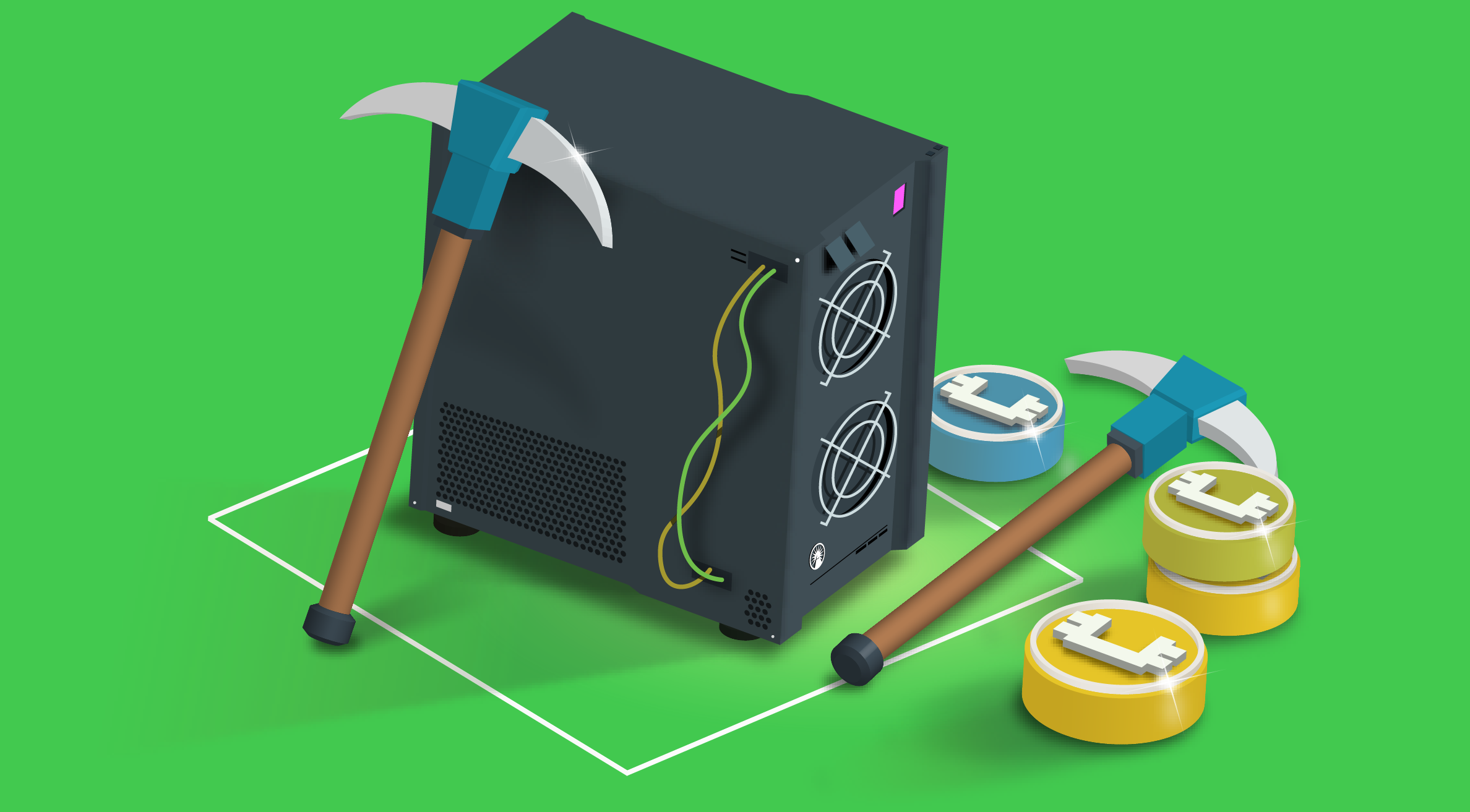
When people hear about cryptocurrency, they often hear about “mining.” It conjures images of digital gold rush, with computers working around the clock to produce valuable coins. But what actually is mining? Is it really like digging for gold? And why is it necessary?
Cryptocurrency mining is the process by which new coins are created and transactions are verified on Proof-of-Work blockchains like Bitcoin. It’s a fundamental part of how these networks maintain security and reach consensus without a central authority. This guide explains what mining is, how it works, and why it matters.
The Purpose of Mining: Securing the Network
Before understanding the mechanics, it’s important to understand why mining exists. On a decentralized network like Bitcoin, there’s no central bank or company to verify that transactions are legitimate. Thousands of computers around the world (nodes) need to agree on the state of the ledger. But how do they prevent fraud, like someone spending the same coins twice?
Mining serves two critical functions:
- Securing the Network: Miners use computational power to make it extremely expensive to attack the network. To reverse a transaction or double-spend, an attacker would need to control more than 50% of the network’s total mining power—a feat that’s practically impossible on large networks like Bitcoin.
- Issuing New Coins: Miners are rewarded with newly created coins for their work. This is how new bitcoins enter circulation, similar to how a central bank prints money, but in a predictable, decentralized way.

How Mining Works: Proof-of-Work Explained
Mining is the process that powers Proof-of-Work (PoW) consensus. Here’s a step-by-step breakdown of how it works on Bitcoin:
1. Transactions Are Broadcast
When someone sends Bitcoin, the transaction is broadcast to the network. It sits in a pool of unconfirmed transactions called the mempool.
2. Miners Gather Transactions
Miners collect pending transactions from the mempool and assemble them into a candidate block. They typically include transactions with the highest fees first, as they get to keep those fees.
3. The Mining Puzzle
To add their block to the blockchain, miners must solve a complex mathematical puzzle. The puzzle involves finding a specific number (called a nonce) that, when combined with the block’s data and run through a cryptographic hash function (SHA-256 for Bitcoin), produces a hash that meets certain criteria—specifically, it must be below a target number set by the network.
This is essentially a guessing game. There’s no way to work backward from the target to find the nonce. Miners must make billions of guesses per second, trying different nonces until they find one that works.
4. Difficulty Adjustment
The Bitcoin network automatically adjusts the difficulty of the puzzle every 2,016 blocks (about two weeks). The goal is to maintain a consistent block time of about 10 minutes, regardless of how much total mining power is on the network. If more miners join and blocks start coming faster, the difficulty increases. If miners leave and blocks slow down, the difficulty decreases.
5. Finding a Solution
When a miner finally finds a valid nonce, they broadcast the solved block to the network. Other nodes quickly verify that the solution is correct. If it is, they add the block to their copy of the blockchain.
6. Reward
The winning miner receives two types of reward:
- The block subsidy: Newly created bitcoins (currently 3.125 BTC as of the 2024 halving).
- Transaction fees: All fees from the transactions included in the block.
This reward incentivizes miners to continue securing the network.
Mining Hardware: From CPUs to ASICs
The history of mining hardware is a story of increasing specialization and competition.
CPU Mining (Early Days)
In Bitcoin’s early years (2009-2010), people mined using regular computer processors (CPUs). Anyone with a laptop could mine bitcoins. Those days are long gone.
GPU Mining
Miners discovered that graphics cards (GPUs) were much better at the repetitive hashing calculations than CPUs. GPU mining became the standard for several years, and it’s still used for mining some altcoins (like Ethereum before its move to PoS).
FPGA Mining
Field-Programmable Gate Arrays (FPGAs) offered better efficiency than GPUs but were harder to program. They were a brief intermediate step.
ASIC Mining (Current Standard)
Today, Bitcoin mining is dominated by ASICs (Application-Specific Integrated Circuits). These are specialized machines built for one purpose: mining Bitcoin. They’re incredibly powerful and efficient but useless for anything else. The leading manufacturers are Bitmain (Antminer series) and MicroBT (Whatsminer series).
Modern ASICs can compute trillions of hashes per second (terahashes). The most powerful units exceed 200 terahashes per second (TH/s).
Mining Pools: Combining Power
Individual miners, even with powerful ASICs, rarely find a block on their own. The odds are like winning the lottery—you might mine for years with no reward. To smooth out income, miners join mining pools.
A mining pool is a group of miners who combine their computational power and share rewards proportionally to the work contributed. When the pool finds a block, the reward is distributed among members based on how many hashes they contributed.
Popular mining pools:
- Foundry USA (largest in North America)
- Antpool (owned by Bitmain)
- F2Pool
- ViaBTC
- Binance Pool
While pools make mining accessible to individuals, they also introduce centralization concerns. If one pool controls more than 50% of the network’s hashrate, it could potentially attack the network. Most pools voluntarily limit their size.
Mining Profitability: What Affects It?
Mining is a business. Profitability depends on several factors:
1. Hashrate and Hardware Efficiency
More powerful hardware (higher hashrate) means more chances to solve the puzzle. Efficiency (joules per terahash) determines electricity costs. Modern ASICs are much more efficient than older models.
2. Electricity Costs
Electricity is the biggest ongoing expense. Miners seek the cheapest power available—often in regions with excess hydroelectric, natural gas flaring, or stranded energy. Some miners even build portable rigs to chase cheap power.
3. Bitcoin Price
The value of the rewards directly affects profitability. When Bitcoin’s price rises, mining becomes more profitable (assuming costs stay the same). When it falls, less efficient miners may be forced to shut down.
4. Network Difficulty
As more miners join the network, difficulty increases, making it harder to find blocks. This creates a self-regulating cycle: high prices attract more miners, which increases difficulty, which can squeeze less efficient miners.
5. Block Reward Halvings
Approximately every four years, the Bitcoin block reward is cut in half. This reduces the supply of new bitcoins but also cuts miner revenue. After each halving, less efficient miners may become unprofitable and drop out, until difficulty adjusts.
The Environmental Debate
Bitcoin mining’s energy consumption has sparked intense debate.
The criticism: Bitcoin uses as much electricity as some small countries. Critics argue this is wasteful and environmentally destructive, especially if the energy comes from fossil fuels.
The defense:
- Miners are economically incentivized to find the cheapest energy, which is often renewable or otherwise wasted (like flared natural gas or excess hydro).
- Studies suggest a significant and growing percentage of mining uses renewable energy.
- Mining can actually help stabilize energy grids by acting as a flexible load that can be turned off during peak demand.
- Compared to the energy consumption of traditional banking and gold mining, Bitcoin may be comparable or even more efficient.
Ethereum’s move to Proof-of-Stake eliminated its energy consumption by ~99.95%, proving that PoW isn’t the only way. But Bitcoin remains committed to PoW, viewing its energy use as a feature (security through physical work) rather than a bug.
Mining Beyond Bitcoin
While Bitcoin is the largest PoW network, other cryptocurrencies also use mining:
- Litecoin (LTC): Uses Scrypt algorithm, which is ASIC-resistant (though ASICs now exist).
- Dogecoin (DOGE): Merged mining with Litecoin.
- Monero (XMR): Designed to be ASIC-resistant to encourage CPU mining and decentralization.
- Ethereum Classic (ETC): Continues PoW after Ethereum merged to PoS.
Most newer blockchains use Proof-of-Stake instead, avoiding mining entirely.
How to Start Mining (If You Want to Try)
For most people, solo mining Bitcoin at home is not profitable—you’d spend more on electricity than you’d earn. However, you can still participate in other ways:
1. Join a Mining Pool
If you have ASIC hardware, join a pool to get consistent payouts. Calculate profitability using online calculators, factoring in hardware cost, electricity, and pool fees.
2. Cloud Mining (Generally Not Recommended)
Services that sell mining contracts are often scams or unprofitable. Avoid cloud mining unless you really know what you’re doing.
3. Mine Other Coins with GPU
You can build a GPU rig to mine altcoins like Ravencoin, Kaspa, or others. Check WhatToMine for profitability estimates. Be aware that GPU mining is more accessible but also competitive.
4. Staking (Alternative)
If you’re interested in earning passive income from crypto but don’t want the hassle of mining, consider staking on Proof-of-Stake networks like Ethereum, Solana, or Cardano. It’s much more energy-efficient and accessible.
The Future of Mining
What does the future hold for cryptocurrency mining?
- Continued Industrialization: Mining will likely become even more industrialized, with large-scale operations in regions with cheap energy.
- Renewable Energy Integration: Expect more mining operations powered by solar, wind, hydro, and stranded gas.
- Grid Balancing: Miners may increasingly serve as flexible loads that help stabilize energy grids.
- Regulation: Governments may impose regulations on mining, particularly regarding energy use and carbon emissions.
- Bitcoin’s Last Halving: Around 2140, the last bitcoin will be mined. After that, miners will rely solely on transaction fees, raising questions about long-term security incentives.
Conclusion
Cryptocurrency mining is the engine that secures Proof-of-Work blockchains. Through a combination of computational competition and economic incentives, miners validate transactions and create new coins in a decentralized way.
While mining has evolved from hobbyists with laptops to industrial-scale operations with specialized hardware, its core purpose remains the same: to maintain a secure, decentralized ledger without a central authority. The environmental debate continues, but so does innovation in energy efficiency and renewable integration.
Understanding mining helps you appreciate the security and economics of networks like Bitcoin—and why Proof-of-Work remains a foundational, if controversial, technology in crypto.
Disclaimer: This article is for informational purposes only and does not constitute financial advice. Mining involves significant financial and technical risk. Always do your own research.