When most people think of cryptocurrency, they think of Bitcoin—digital gold, a store of value, a peer-to-peer payment system. But in 2015, a new platform launched that expanded the possibilities of blockchain technology far beyond simple transactions. That platform is Ethereum. While its native currency, Ether (ETH), is the second-largest cryptocurrency by market cap, Ethereum itself is better understood as a decentralized world computer. This guide explains what Ethereum is, how it works, and why it’s the foundation for the next generation of the internet.
The Limitation of Bitcoin: A Simple Ledger
To understand why Ethereum is revolutionary, it helps to understand Bitcoin’s limitations. Bitcoin’s blockchain is primarily designed to do one thing well: track who owns how many bitcoins. It’s like a specialized calculator. You can send and receive BTC, but you can’t run complex programs on it. Its scripting language is intentionally limited for security reasons.
Ethereum took a different approach. Instead of just tracking balances, Ethereum allows developers to upload and execute code on its blockchain. Think of it as a smartphone versus a calculator. A calculator does math; a smartphone runs apps (like Uber, Instagram, or games). Ethereum lets you run “apps” directly on the blockchain. These apps are called decentralized applications, or dApps.

The Key Innovation: Smart Contracts
The magic behind Ethereum is the smart contract. A smart contract is a piece of code that automatically executes when certain conditions are met. It’s like a vending machine: you put money in, select a snack, and the machine automatically gives you the snack. No human cashier is needed. The contract is “if this, then that.”
However, unlike a vending machine, a smart contract on Ethereum:
- Is Public: Anyone can see the code.
- Is Immutable: Once deployed, it cannot be changed (with some exceptions).
- Runs Exactly as Programmed: No interpretation, no loopholes.
- Has No Counterparty Risk: You don’t need to trust the person you’re dealing with; you only trust the code.
This seemingly simple concept—code that automatically executes agreements—opens up a universe of possibilities.
What is Ether (ETH)? The Fuel of the Network
While the platform is called Ethereum, its native cryptocurrency is called Ether (ETH). Many people use “Ethereum” to refer to both the network and the currency, which is technically incorrect but common.
Ether serves two primary purposes on the network:
- As Digital Money: Just like Bitcoin, you can send ETH to someone as a payment or store it as a value. It’s a fully-fledged cryptocurrency.
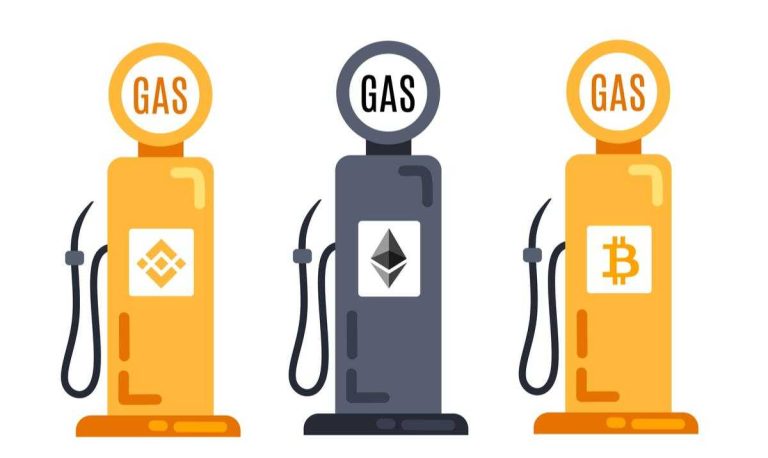
- As “Gas” (Fuel): This is the crucial distinction. Every computation on the Ethereum network—every smart contract execution, every dApp interaction, every token transfer—requires computing power. You pay for this computing power with a fee called Gas, and Gas is paid in ETH.
Think of ETH as the fuel that powers the Ethereum world computer. If you want to run a program (send a transaction or use a dApp), you need to pay for the energy it consumes with Gas (ETH). This fee mechanism prevents the network from being clogged by spam and malicious actors.
The Ethereum Virtual Machine (EVM)
How does Ethereum run code without a central server? The answer is the Ethereum Virtual Machine (EVM). The EVM is a global, decentralized computer whose state is agreed upon by every participant in the Ethereum network.
When you run a smart contract, it isn’t running on your laptop or a single server. It’s being executed simultaneously by thousands of nodes (computers) around the world. The EVM ensures that every node gets the same result from the same code. This creates perfect transparency and verifiability. The EVM is so influential that other blockchains (like Polygon, Avalanche, and Binance Smart Chain) have adopted EVM compatibility, meaning developers can easily port their applications over from Ethereum.
What Can You Build on Ethereum?
Ethereum’s programmability has led to an explosion of innovation. Here are the main categories of applications built on it:
1. Decentralized Finance (DeFi)
DeFi is arguably the most successful use case for Ethereum so far. It aims to recreate traditional financial systems (lending, borrowing, trading, insurance) without banks or intermediaries. Instead of a bank holding your money and lending it out, you interact directly with smart contracts.
Examples:
- Uniswap: A decentralized exchange (DEX) where you can swap one token for another without a central authority.
- Aave: A lending protocol where you can lend your crypto to earn interest or borrow against your holdings.
- MakerDAO: A protocol that issues the DAI stablecoin, which is pegged to the US dollar.
2. Non-Fungible Tokens (NFTs)
While NFTs exist on other blockchains, Ethereum is where they exploded into the mainstream. An NFT is a unique token that represents ownership of a specific item—digital art, collectibles, music, or even real-world assets. The Ethereum blockchain provides the proof of ownership and authenticity.
Examples: CryptoPunks, Bored Ape Yacht Club, digital art marketplaces like OpenSea (which is built on Ethereum).
3. Decentralized Autonomous Organizations (DAOs)
DAOs are internet-native communities with shared bank accounts and rules encoded in smart contracts. Instead of a CEO making decisions, members vote on proposals using tokens. The code automatically executes the will of the group.
Examples: A DAO could be formed to buy a rare piece of art, manage a venture capital fund, or govern a DeFi protocol.
4. Web3 and the Metaverse
Ethereum is a key building block of Web3—the vision for a decentralized internet where users own their data and digital assets. Many virtual worlds (the Metaverse) are built on Ethereum, where you can buy land (as an NFT), build structures, and interact with others.
Examples: Decentraland (MANA) and The Sandbox (SAND).
Ethereum vs. Bitcoin: Key Differences
It’s helpful to compare Ethereum directly to Bitcoin to understand their different philosophies:
| Feature | Bitcoin (BTC) | Ethereum (ETH) |
|---|---|---|
| Primary Purpose | Peer-to-peer digital cash, store of value | Decentralized world computer for dApps |
| Programming | Turing-incomplete (limited scripting) | Turing-complete (can run any program) |
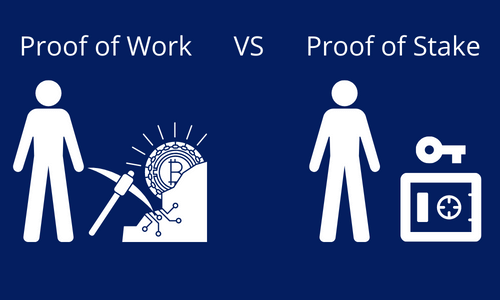
| Consensus (as of 2024) | Proof-of-Work (mining) | Proof-of-Stake (staking) |
| Supply | Capped at 21 million | No fixed cap, but issuance is controlled and can be burned (deflationary at times) |
| Block Time | ~10 minutes | ~12 seconds |
| Founder | Anonymous (Satoshi Nakamoto) | Public (Vitalik Buterin and others) |
The Merge: Ethereum’s Move to Proof-of-Stake
In September 2022, Ethereum underwent a monumental upgrade called “The Merge.” It transitioned the network from Proof-of-Work (energy-intensive mining) to Proof-of-Stake. This was a massive shift that reduced Ethereum’s energy consumption by over 99.9%. Instead of miners competing with computing power, the network is now secured by validators who “stake” (lock up) their ETH as collateral. If they act dishonestly, their staked ETH can be slashed (taken away). This upgrade made Ethereum more scalable, secure, and sustainable.
Challenges: Scalability and Gas Fees
Ethereum’s biggest challenge is scalability. Because every transaction must be processed by thousands of nodes, the network can get congested. When this happens, Gas fees (transaction fees) can skyrocket, sometimes making simple transactions cost $50 or more during peak times.
The solution to this is Layer 2 (L2) scaling solutions. These are separate blockchains built on top of Ethereum that process transactions off the main chain and then bundle them back to Ethereum. This dramatically increases speed and reduces cost. Examples include Arbitrum, Optimism, and Polygon. The future of Ethereum usage is largely expected to happen on these Layer 2 networks.
Who Created Ethereum?
Ethereum was proposed in late 2013 by a young programmer named Vitalik Buterin, who was just 19 years old at the time. He envisioned a blockchain that could do more than just transfer value. He co-founded the project with several others, including Gavin Wood, Charles Hoskinson (who later founded Cardano), and Joseph Lubin (who founded ConsenSys). The project was funded through a public crowdsale in 2014, and the network went live on July 30, 2015.
Conclusion
Ethereum is far more than a cryptocurrency. It’s a global, decentralized platform that is reshaping finance, art, governance, and the internet itself. By introducing smart contracts, Ethereum unlocked the ability to build trust-minimized applications that run exactly as programmed. While it faces challenges like scalability, the ongoing development of Layer 2 solutions and the successful transition to Proof-of-Stake show a robust and evolving ecosystem. Understanding Ethereum is key to understanding the broader world of Web3 and decentralized technology.
Disclaimer: This article is for informational purposes only and does not constitute financial advice. The cryptocurrency market is volatile, and you should always do your own research before making any investment decisions.