Автор: editor editor

  • South Korea would allocate about $360 million for the development of blockchain in the country

    South Korea would allocate about $360 million for the development of blockchain in the country

    Ministry of Science and also the Ministry of Information and Communication Technology of South Korea are preparing to launch a pilot program for the development of blockchain in the country.

    Under «Blockchain Technology Validation Support 2020» it is expected to be selected nine projects working with blockchain. They get 450 million won (about $360 000). Organizers of the program informed that startups will be selected according to the following criteria: the results of current performance, the possibilities for technical realization their concept in the future, the viability of the proposed technology and also a plan for the further development and the challenges, that needs to be done.

    Besides, departments were said that for participation in the project firms should offer such services in which mandatory use of blockchain and services would have economic and social value. It is known, that among startups selected to participate in the program five firms have already submitted their applications for registration of a patent. Nine firms have submitted their applications for registration of copyright and two firms have conducted investment round.

    «South Korea is committed to assisting the local startups to create a business model which works at the base blockchain, Internet of Things (IoT), artificial intelligence and big data. We must evolve rapidly in this area while the market of blockchain is still young», — said Minister of Science and Technology Park Yoon-kyu. South Korea not only implements blockchain in various spheres of action but also paves the way for work the cryptocurrency companies in the country. Earlier in the month, the parliament of South Korean passed the bill to regulate cryptocurrency. Besides, in the first half of this year Government planned to submit a new law under which individuals will be required to pay income tax on their earnings obtained from trading activity with cryptocurrency.
  • Fire blocks allow access to the Defi protocol for institutional users

    Fire blocks allow access to the Defi protocol for institutional users

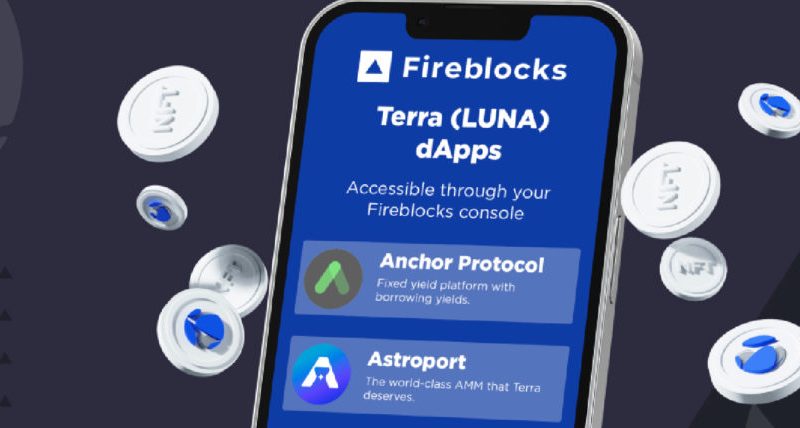
    Kryptovut Security Company Fireblocks merged with Defi protocol in order to allow access to decentralized credits for institutional users.

    Now user’s Fireblocks can collect assets held by Hot Vault on Compound. And they can receive interest in the use of these funds to the lending of users. The company uses a multi-party computation protocol to ensure the safety of remittance.

    Also, institutional investors will see their funds in Hot Vault. It should be noted, whether hardware wallet or extensions like MetaMask are used usually to access to platforms such as Compound. In a corporate environment, these kinds of solutions usually are inappropriate.

    «If you are a retail investor with a few hundred bucks, there is no problem. But if you handle the big bucks, then you sure won’t want to transfer a few million dollars on MetaMask just for the job with Compound», — emphasized Kevin Yedid-Botton. It is the leader of Investment Company ParaFi, as a client of Fireblocks.

    Another client of Fireblocks, co-founder Amber Group Kevin Yedid-Botton supported the colleague. He noted that it would be unthinkable to the situation when people use MetaMask for trade millions of dollars of corporate funds.

    However, according to Kullande, Amber Group has not yet considered taking advantage of the new opportunities because of cheap money. On the Compound platform with credit in the ETH rate is just 0.01%. It should be reminded that on 8 March $2 534 760 in ETH was liquidated on Compound protocol. It is an all-time record since the start of the second version of the protocol in May last year.

  • Stock-market of Luxemburg and Credit Suisse launching platform “FundsDLT” based on Ethereum

    Stock-market of Luxemburg and Credit Suisse launching platform “FundsDLT” based on Ethereum

    Stock-market of Luxemburg in cooperation with Credit Suisse and other financial organizations getting started to launch a new investment platform “FundsDLT” based on Ethereum blockchain.

    On the creation of this system are working not just a stock-market but also its sub-company Fundsquare, Credit Suisse’s department for asset management of the bank, companies Clearstream and Natixis Investment Managers. Thankfully to distributed ledger technology (DLT), FundsDLT will eliminate the necessity of making extra financial activities for distributors, institutions that serve crypto-farms and save them huge amounts of money.

    “Credit Suisse, DLT and smart-contracts will simplify control over bills, processing of transactions and reporting about made spendings. Moreover, the system is using not just Ethereum blockchain but also privacy protocol Quorum for the highest level of security” — was said by one of the FundsDLT’s workers.

    The representative of the company has specified, that the company will focus on certain services that usually require intermediaries, but DLT will do the work faster and in much better quality. The operational HR of NIM (Natixis Investment Managers) Joseph Pinto has mentioned the necessity of blockchain’s introduction in the area of investments, which will let their owners see all the incomes and distributions of gotten money. By the way, developers of FundsDLT claimed about starting the financing of Serie A. Credit Suisse has started testing of the blockchain technology for processing of deals with investment funds since February of the last year, which is pretty successful. Later top-manager of Credit Suisse Emmanuel Aidoo claimed that the introduction of blockchain in the banking system and the financial area has been held back by bankers who want to save their “status quo”.

  • The biggest government newspapers blockchain base was hacked in Argentina

    The biggest government newspapers blockchain base was hacked in Argentina

    “Our own newspaper’s system, which is based on blockchain, was hacked and used for spreading fake news about coronavirus” — was admitted in Boletin Oficial, the official informative recourse of Argentina’s government.

    Local resource El Cronista has told about a group of people who tried to hack the newspaper’s system but faced the only failure. However, they found a weak spot in the core, which did let them add some fake news about coronavirus pandemic. Also, there were added some instructions for government workers about their actions while the emergency because of terrifying illnesses (coronavirus). Soon, just after it was noticed by the company’s workers, the website Boletin Oficial was shut down for a few hours.

    This informative resource is main in the country and belongs to Argentina’s government. Moreover, after decree No 207/2016 its digital version (web-site) became part of governmental’s property. Nowadays each new accepted law or decree by the government has been publishing in Boletin Oficial.

    The most interesting and confusing part of this story is that this article still can be found on the official site. Looks like people, who are in charge of the country and newspaper has decided to leave this fake news and legalize it.

    The blockchain platform used by Boletin Oficial is the part of Argentina’s national project called “Blockchain Federal Argentina”. This project has been made especially for government and private companies. By the way, at the beginning of March, the system which is used for registration of new companies will be shut down one more time for 180 days. Official reason — create some improvements to make the site safer and more perfect.

  • Central Bank of Sweden is going to stand in charge of the BIS initiation. Government cryptocurrency study

    Central Bank of Sweden is going to stand in charge of the BIS initiation. Government cryptocurrency study

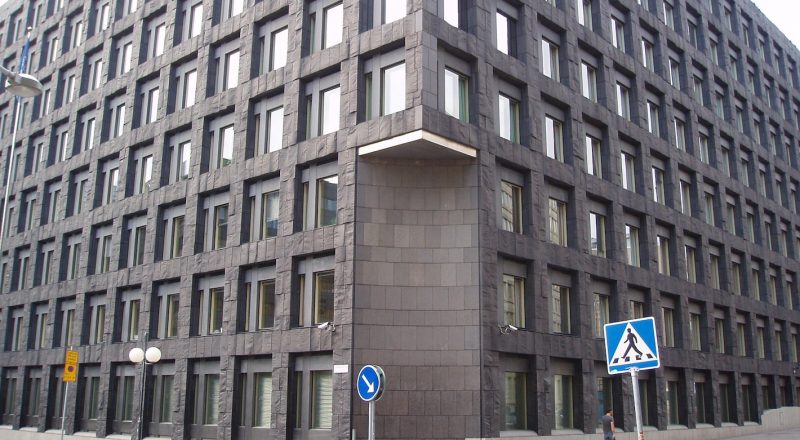
    CB of Sweden awaits permission from the parliament and of the BIS (Bank of International Settlements) for creating of Innovation Center for studying cryptocurrency.

    The request for placing BIS on the territory of the country was earlier published by the government. The goal of this initiative is to learn and understand the new important trends in the area of technologies, which is important for banks in our days. Also, it has to become a coordination center for workers of banks in the area of innovations.

    One of the main center’s goals is the development of the government’s cryptocurrency. By the way, one month ago Central Bank has started the testing of its digital currency. That is the main reason why BIS must be placed there. Due to that chief of the CB think that their bank has a huge advantage in front of other competitors.

    Center of the Bank’s innovations in the area of settlements is not just a private organization but the official branch of BIS. Moreover, workers of this organization are protected from political persecution of Swedish courts. In request of the CD of Sweden was said:

    “Including that the CB has already passed a long way in the analysis of government’s cryptocurrency it can provide to BIS all their known information based on cooperation between government and private sectors, scientists and other central banks if BIS demands it”.

    Many of other Swedish banks have been studying the concept of creation of their cryptocurrency, but CB has gone far away ahead from them. Central Bank started studying this area of technologies in 2017 because most of the population rapidly had started using wireless payments instead of traditional payments in cash.

    For past years CB achieved huge progress so that in February they started testing their own official government’s cryptocurrency — digital crone. Bank of Sweden thinks that they are the only ones enough developed organization in the country which can become a Center of innovation so that they are keep asking parliament and BIS about that.

    Center of innovations BIS

    It is obvious that CI (Center of innovation) must be sponsored. CB requires parliament about 30 million crones per year during the next 5 years for their work in this area. This sum is approximately 50% of all CB’s dividends on BIS shares. (CB owns 3.2% of BIS’ shares).

    However, people still want to get rid of cash-money in the advantage of bank cards, wireless payments, and cryptocurrencies regardless of will CI be in the country or will not.

    Right now are pretty difficult times for both CB and BIS, what’s getting only worse due to peculiar “wars for CI” between banks inside of Sweden. At the beginning of this month, BIS had published an article about rapid changes in the system of payments in the world. Mostly the article was devoted to P2P-payments, token-shares and government’s cryptocurrencies.

    In the report of BIS was mentioned that any kind of initiations of stablecoins is a real danger for the influence of CBS on monetary politics and financial stability. All researches of this organization have admitted the necessity of global reactions on Libra initiation. During the previous few months, all central banks raised questions about the country’s cryptocurrency. In January all six central banks in cooperation with BIS created a special group for researches of cryptocurrencies, and are planning to discuss a possibility of release of their own one in April.

  • Binance is going to invest $50 million to help India’s cryptocurrency ecosystem develop

    Binance is going to invest $50 million to help India’s cryptocurrency ecosystem develop

    Binance stock exchange has created a foundation with $50m capital to support the development of the cryptocurrency ecosystem in India.

    Binance and the local WazirX stock exchange acquired by them in November of 2019 has launched a program called «Blockchain for India». Startups specialized in the Indian cryptocurrency industry and blockchain can become its members.

    They plan to invest money by acquiring shares in Indian startups or by buying their tokens. Projects capable of developing a full-scale infrastructure for cryptocurrency trading will be their main target. Such projects include fiat channels, payment platforms, stablecoins and decentralized finance applications. Binance is planning to invest from $100 000 to $5m per startup.

    WazirX founder and CEO Nischal Shetty noted that India contains a great amount of developers, and his foundation will help to unlock the «incredible potential of blockchain ecosystem».

    He said that Binance is glad to co-operate with local foundations that are sharing their goals.

    At the same time, a project aimed at sharing the knowledge about blockchain technology in studying institutions will be developed. At the beginning of March, it became known that the Supreme Court of India lifted the ban on cryptocurrency operations, established by the Central Bank in April of 2018.

  • Enargas Gives Approval for the Start of the Gasnet Platform Based on Blockchain for Gas Certification

    Enargas Gives Approval for the Start of the Gasnet Platform Based on Blockchain for Gas Certification

    Enargas, an Argentine gas regulator, has given its approval for the start of the Gasnet platform based on a controlled blockchain whose task is to reduce and to accelerate the gas certification process.

    The Gasnet platform, using the net of RSK smart contracts, is created by IOV Labs in the cooperation with Grupo Sabra, a developer of software. According to Pedro Perrota, who is one of Grupo Sabra co-founders, the platform not only will significantly reduce document management between a gas distributor Gasnor, customers and companies but also will accelerate the process of gas certification what usually takes about three months.

    According to Diego Gutierrez, IOV Labs General Director, Gasnor and Energas will have the possibility to check all certifications and details of the completed transactions online. A transparent system will help to exclude any delays, thereby technical specialists will be able to provide the services to clients faster. Using private keys, technicians will control each step of the process, and smart contracts will allow to reduce inaccuracies and to confirm the reliability of the records.

    Originally, the platform will be used for gas certification. But in the nearest future, in the process of successful system exploitation, IOV Labs and Grupo Sabra want to broaden its functions to track and manage a gas supply chain. The developers also intend to create an entire ecosystem based on blockchain. All regulated Argentine companies, working in the gas industry, will have the possibility to take its part. We recall that last September a Dutch oil and gas company Dietsmann has been starting to test the blockchain for fast interactions with clients and suppliers. In addition to it, last December Oil & Gas Blockchain Consortium used blockchain for the voting on investment and costs issues.

  • Regulatory Rules of Digital Assets Will be Toughened by FINTRAC

    Regulatory Rules of Digital Assets Will be Toughened by FINTRAC

    FINTRAC is going to present updated regulatory rules of digital assets to counter money-laundering.

    According to these rules, what will enter into force since June 1, 2020, exchanges will be required to review their policies in the KYC procedure. FINTRAC offers to toughen supervising activities of cryptocurrency companies and to strengthen a transaction control of digital assets. The companies which turnover is more than $10,000 will be obliged to register as cash operators.

    If the sum of the transaction is more than $1,000, such companies must state the sender’s name, the recipient’s name, their addresses, a birth date, a contact phone number and the type of cryptocurrency in which the deal is. As for the transactions with a larger sum, the regulator will demand to provide more detailed information.

    FINTRAC thinks that rules issued by FATF concerning the AML and the CFT procedures aren’t scrupulous enough. That’s why it’s necessary to set a new “threshold” for the firms, working with digital assets. Moreover, in a regulator’s opinion, updated regulatory rules must act not only in Canada’s interest but also in other jurisdictions. We recall that this January CSA has published the manual. According to the manual, Canadian exchanges will put under the national laws about stocks in case they work with crypto-assets, which are stocks and derivatives.

  • An Exchange Zebpay Denied the Information About Regulatory Violations

    An Exchange Zebpay Denied the Information About Regulatory Violations

    Zebpay, an Indian cryptocurrency exchange, denied local mass media’s information about numerous violations, identified by regulators during the review. The company referred to a fixed mistake in accounting.

    This week local mass media has informed about the audit of Zebpay by the Ministry of Corporate Affairs (MCA) of India. In the result of it, the violations in different provisions of the Law “About companies” were found. Vikram Rangala, Zebpay Marketing Director, commented on the situation, specifying that the audit was but in the beginning of last year.

    In his words, the only violation was the accounting mistake, which appeared because of uncertainty in digital assets regulation and absence of clear requirements in reporting of cryptocurrency transactions. However, the issue was closed, the mistake was eliminated and the exchange had to pay “a small fine”. Its exact sum wasn’t reported.

    Rangala added that the exchange had met the regulators’ requirements. Any violations in unethical or illegal actions weren’t charged. He explained that mass media misinterpreted what happened.

    In the words of Ddeepak Kapoor, BEGIN India Analytical Centre Founder, who cooperated with an Indian Government and Authorities to combat cryptocurrency crimes, the Ministry didn’t have anything against Zebpay.

    Kapoor noted that the issue of firms’ taxation, working in the sphere of blockchain and cryptocurrencies, must be addressed. It was necessary to avoid misunderstandings about what could “put an imprint” on the companies’ activities. The exact regulation would be able “to make life easier” not only for such companies but also for the government authorities. Let us recall that in September 2018 Zebpay ceased trading in connection with the Central bank of India’s decree, prohibited to provide services to cryptocurrency exchanges by local financial institutions. Despite that prohibition, the exchanged promised its clients to return the funds to their bank accounts in Indian rupees. In this February Zebpay stated about its reactivation in a country.

  • A Regulatory Sandbox for a Cryptocurrency Company will be Launched in Hawaii

    A Regulatory Sandbox for a Cryptocurrency Company will be Launched in Hawaii

    The government of an American state Hawaii is planning to launch a regulatory “sandbox” for companies, issuing and working with digital currencies.

    The official statement says about the “Digital Currency Innovation Lab” creation. Under this two-year initiative, companies, issuing cryptocurrencies, will be able to work in Hawaii without a state license for financial services.

    The State Governor notices that he hopes to get a broader picture of digital currencies and their possibilities during a state of “sandbox”. In the future digital currencies in Hawaii may be legalized.

    “Information, getting during the initiative, will help us to define the future of digital currencies in Hawaii”, the statement says.

    Companies will be able to make their applications since May 1, 2020. However, for the application’s approval, each company needs to demonstrate both high financial knowledge and technologies and to have the necessary capital.

    This program is the result of cooperation by the Ministry of Trade, FID and Hawaiian Technology Development Corporation. Furthermore, the companies, taking part in the “sandbox”, won’t be under a regulatory investigation in case of any breaches.

    We recall that in this January several Hawaiian legislators offered some local banks to save “digital stocks”, “virtual assets” and other “open blockchain tokens”.